

Comparison Between Scrum and Kanban: Top 7 Pros and Cons
-
Home
-
Agile Management
-
Comparison Between Scrum and Kanban: Top 7 Pros and Cons

Comparison Between Scrum and Kanban: Top 7 Pros and Cons
Discover the key differences between Scrum and Kanban in Agile project management. Learn the top 7 pros and cons of each to choose the best method for your team in 2025.

Table of Content
-
Navigating Agile Methodologies
-
Workflow Structure
-
Team Roles and Responsibilities
-
Planning and Estimation
-
Metrics and Performance Tracking
-
Scalability
-
Best Fit: When to Use Scrum vs. Kanban
-
Choosing the Right Framework
-
Master Agile with Confidence

Navigating Agile Methodologies
In the fast-paced world of software development and project management, Agile methodologies have revolutionized how teams deliver value. Among the many frameworks, Scrum and Kanban are the two most widely adopted. Each offers distinct advantages, philosophies, and operational flows—but which one is right for your team?
Understanding the pros and cons of Scrum vs. Kanban can help teams choose the right approach based on their goals, team dynamics, and project complexity. This article offers a detailed, side-by-side comparison, tailored for professionals aiming to make informed decisions in 2025 and beyond.
1. Workflow Structure
Scrum:
- Uses sprints (fixed-length iterations, usually 1–4 weeks)
- Teams commit to specific goals within each sprint
- Requires daily stand-ups, planning, reviews, and retrospectives
Pros:
- Clear structure and deadlines
- Encourages discipline and accountability
- Built-in feedback loops
Cons:
- Can be rigid and stressful under strict deadlines
- Less flexibility during the sprint
- Overhead due to regular meetings
Kanban:
- A continuous flow model; no fixed iterations
- Work is pulled as capacity permits
- Visualization via Kanban boards with columns (To Do, In Progress, Done)
Pros:
- Flexible and adaptive
- Less meeting overhead
- Easier to implement for non-technical teams
Cons:
- Less predictability in delivery timelines
- Risk of overloading team if WIP limits aren’t enforced

2. Team Roles and Responsibilities
Scrum:
- Defined roles: Product Owner, Scrum Master, and Development Team
- Each role has clear responsibilities and boundaries
Pros:
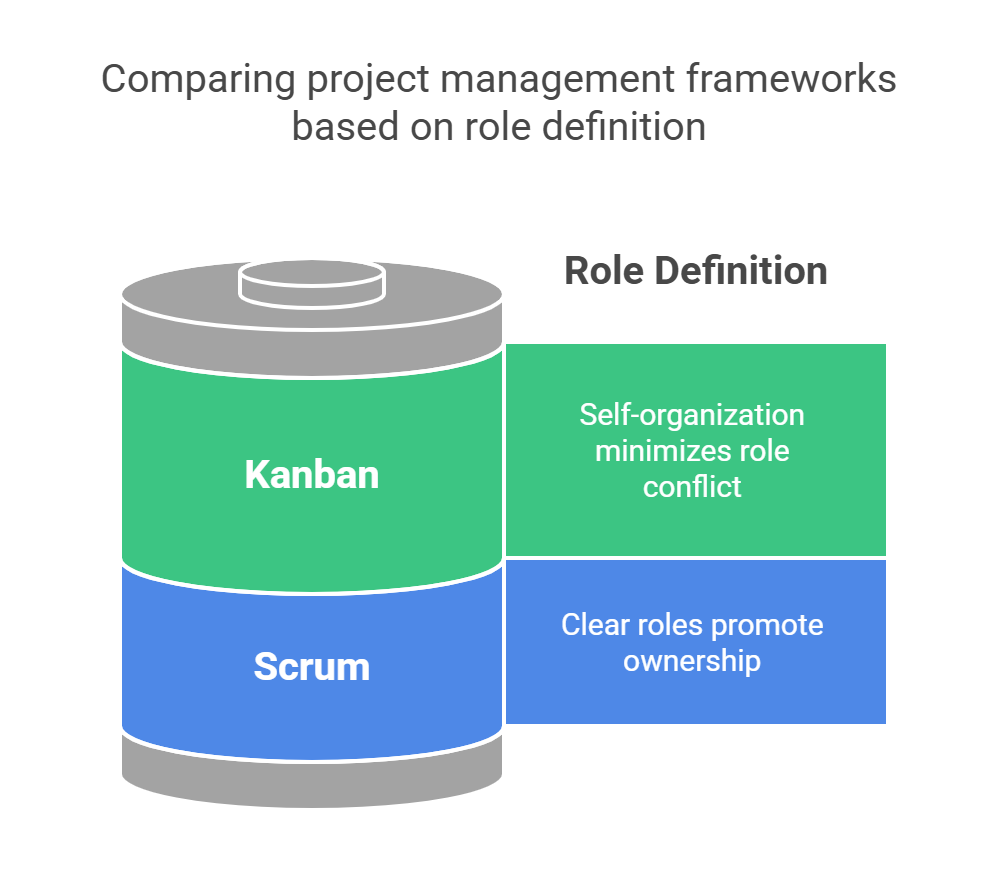
- Promotes ownership and role clarity
- Facilitates collaboration and alignment
Cons:
- May require formal training for effective adoption
- Small teams only; scaling can be complex
Kanban:
- No formal roles are required
- Team self-organizes; anyone can move cards and contribute
Pros:
- Lightweight framework
- Minimal role conflict
Cons:
- Lacks structure in large or complex teams
- Risk of role ambiguity in growing organizations
3. Planning and Estimation
Scrum:
- Emphasizes sprint planning with defined goals
- Uses tools like story points, velocity, and burndown charts
Pros:
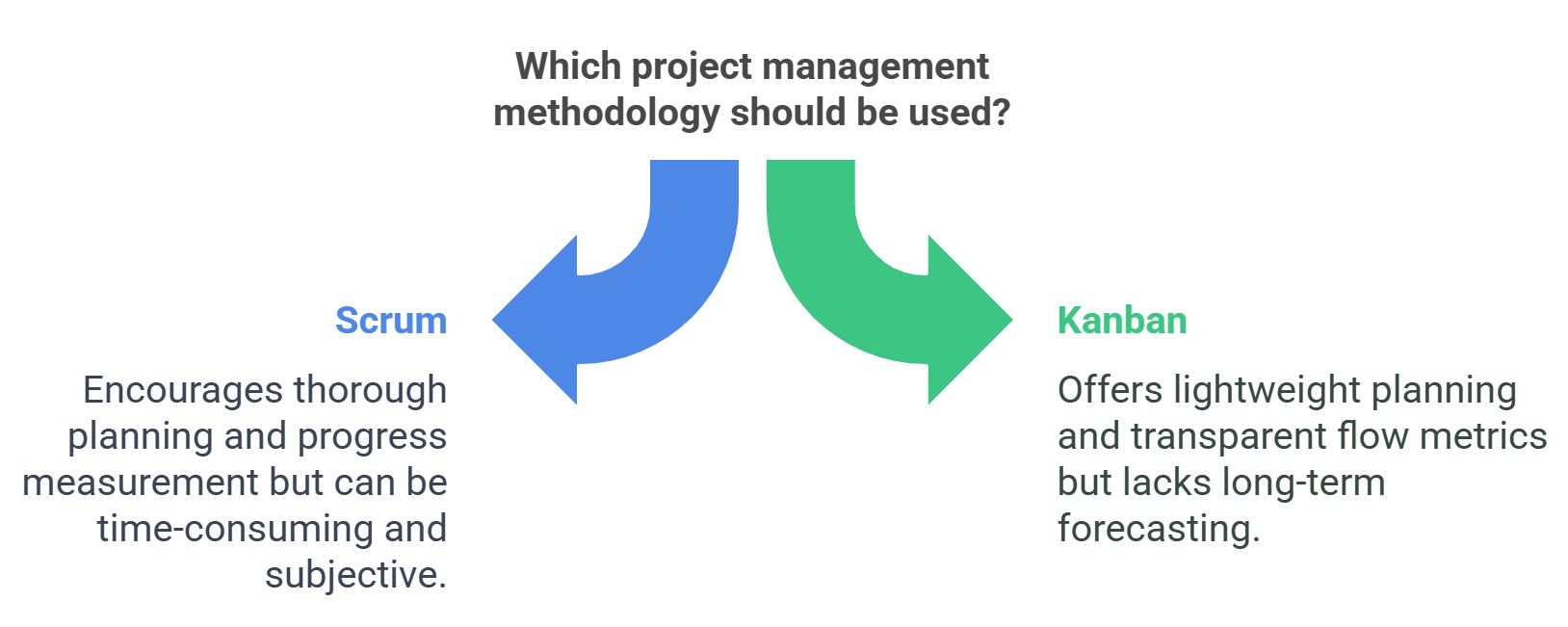
- Encourages thorough planning
- Easier to forecast and measure progress
Cons:
- Time-consuming planning sessions
- Estimations can become subjective and inconsistent
Kanban:
- Planning is ongoing and incremental
- No formal estimation techniques; focuses on lead time and cycle time
Pros:
- Lightweight planning
- Transparent flow metrics
Cons:
- Less emphasis on long-term forecasting
- Can become reactive without a strategic plan
4. Change Management
Scrum:
- Changes are not allowed during a sprint
- New requirements must wait until the next sprint
Pros:
- Protects sprint goals
- Reduces scope creep
Cons:
- Can delay responsiveness
- May frustrate stakeholders with urgent changes
Kanban:
- Highly responsive to change
- New tasks can be added anytime (if WIP allows)
Pros:
- Embraces evolving priorities
- Ideal for support or maintenance teams
Cons:
- Can lead to frequent context switching
- Lack of prioritization without clear guidelines

5. Metrics and Performance Tracking
Scrum:
- Uses velocity, burndown charts, and sprint goal achievement
- Retrospectives help improve processes
Pros:
- Structured feedback and improvement
- Focused KPIs and sprint reviews
Cons:
- Sprint metrics may not reflect long-term outcomes
- Can feel bureaucratic for fast-moving teams
Kanban:
- Uses cumulative flow diagrams, lead time, and cycle time
- Focus on system flow and bottleneck detection
Pros:
- Strong visual cues for process improvement
- Better for continuous delivery models
Cons:
- May not capture qualitative feedback
- Requires more discipline to interpret data meaningfully
6. Scalability
Scrum:
- Scaling frameworks include SAFe, LeSS, and Scrum@Scale
- Complex but structured
Pros:
- Enterprise-level implementation options
- Facilitates team-of-teams models
Cons:
- Scaling adds complexity and overhead
- Needs strong leadership and culture alignment
Kanban:
- Scales organically with additional lanes, teams, or swimlanes
- Used with Portfolio Kanban and Flight Levels
Pros:
- Simple and intuitive to scale
- Minimal additional processes
Cons:
- Requires custom governance models
- Less plug-and-play for enterprises

7. Best Fit: When to Use Scrum vs. Kanban
Scrum Is Best When:
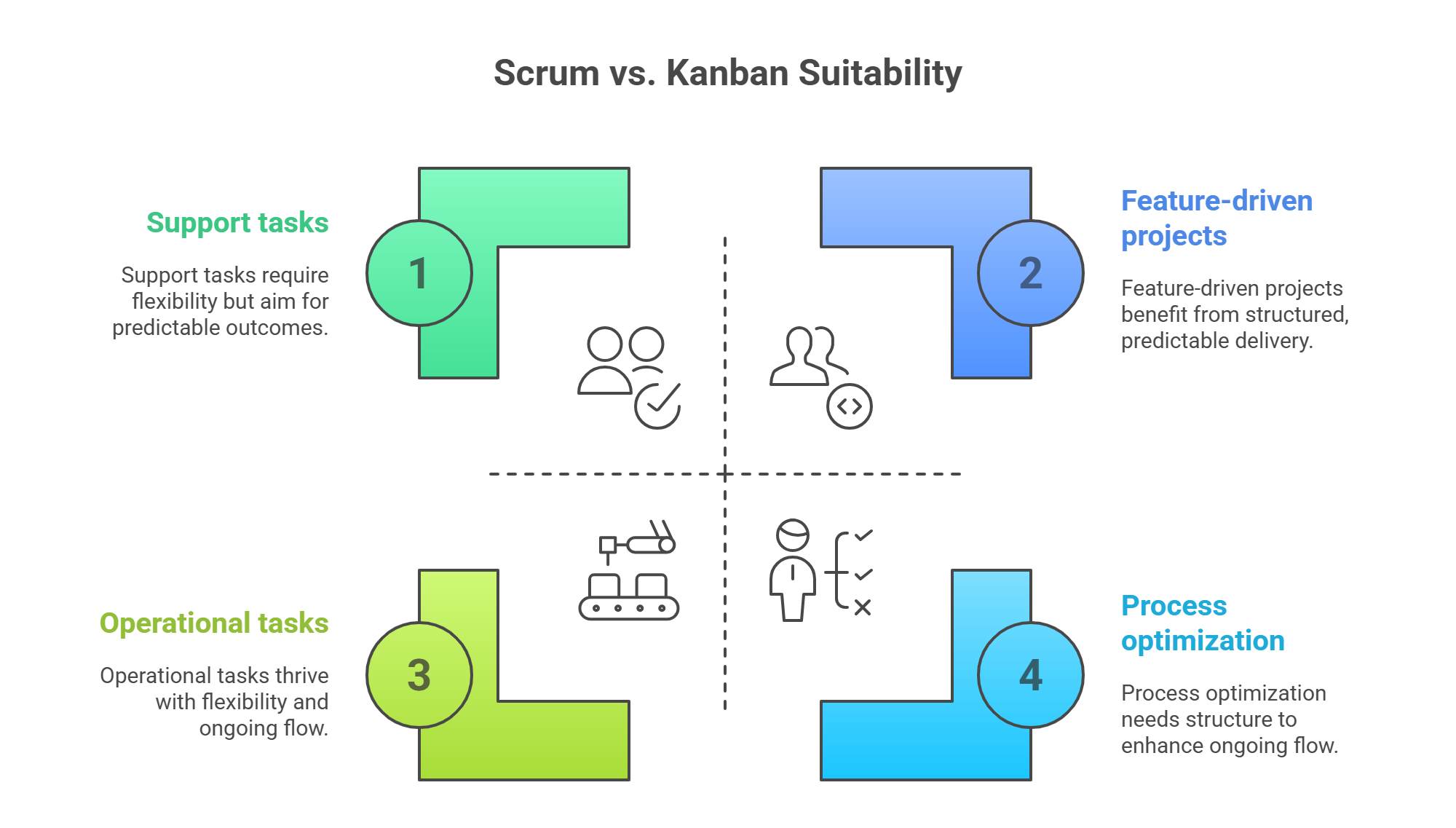
- Projects are feature-driven and need structure
- Teams thrive under defined roles and timelines
- You want predictable delivery and iteration
Kanban Is Best When:
- You need flexibility and ongoing flow
- Teams manage support or operational tasks
- You're optimizing an existing process rather than starting fresh
Choosing the Right Framework

There is no one-size-fits-all answer to the Scrum vs. Kanban debate. Each framework shines in different scenarios:
- Use Scrum for structured, iterative development.
- Use Kanban for flexible, continuous workflows.
Many organizations even adopt a hybrid model called Scrumban, blending the discipline of Scrum with the flexibility of Kanban. The best framework is the one that aligns with your team’s goals, maturity, and working style.
Master Agile with Confidence

Want to go deeper into Agile frameworks, team roles, and implementation strategies? Our Agile Project Management Course covers Scrum, Kanban, and hybrid models like Scrumban—plus how to apply them using modern tools and AI integration.
Join today to unlock a career in next-gen project delivery.
Written By
Critical Legal Writer Intern at BISJHINTUS, English Honours (Gold Medalist) / LL.B.

Designed By
UI/UX Designer at BISJHINTUS

Share this post:
Leave a comment
Your email address will not be published. Required fields are marked *
Write a Review
Related Posts

Discover how AI transforms Agile project management in 2025. Learn AI tools, strategies, and use cas...

Discover the top 5 Agile project management strategies for 2025. Learn how to lead digital teams wit...
