


How to Raise Smart Capital for Your Startup in a Competitive 2030 Market
Learn how to raise smart capital in 2030's competitive startup landscape. Discover modern funding strategies, pitch methods, investor types, and AI-driven tools every founder must know.


Table of Content
-
Why Raising Capital in 2030 Requires a Smarter Strategy?
-
Redefining “Smart Capital” for Modern Founders
-
Knowing Your Investors: Matching Strategy with Stage
-
Crafting a 2030-Ready Pitch That Converts
-
Leveraging AI and Digital Tools for Fundraising Success
-
Alternative Funding Paths Beyond Traditional VCs
-
Join the Founder MBA 2030: Build Fast. Scale Smart.
-
Frequently Asked Questions

Why Raising Capital in 2030 Requires a Smarter Strategy?
By 2030, the funding landscape has evolved into a fiercely competitive and technologically complex space. Traditional approaches to capital raising—cold emails, pitch decks, and generic elevator pitches—are no longer sufficient. Investors today are flooded with AI-curated deal flow, advanced founder profiling, and real-time market data, making it harder than ever to stand out.
Startups are launching faster, markets are saturating quicker, and investor expectations are sharper. Founders must now be part strategist, part storyteller, and part technologist. The rise of founder scoring algorithms, AI-powered due diligence, and data-rich pitch rooms means capital is flowing—but only to those who approach it intelligently.
The good news? While competition is fierce, the capital pool has expanded. Global investor access, micro VCs, syndicates, and crowdfunding platforms now offer more paths than ever before. But to tap into these, founders must use smart capital strategies—tailored, data-backed, and future-focused.
1. Redefining “Smart Capital” for Modern Founders

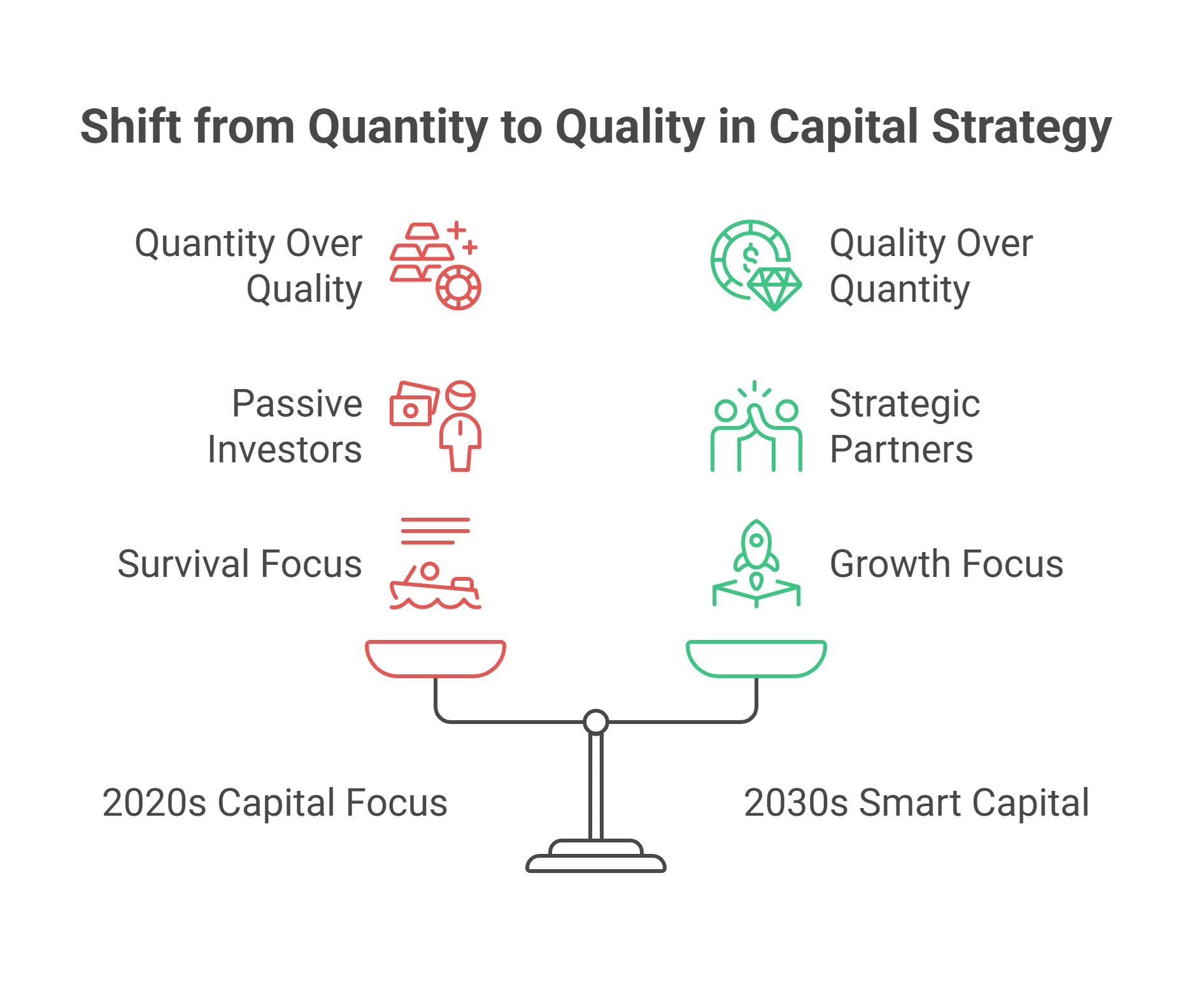
In the 2020s, capital was often about how much you raised. In 2030, it’s about who you raise from, when, and why. Smart capital isn’t just money—it’s a strategic resource that accelerates growth, not just survival.
What makes capital “smart” in 2030?
- Strategic Alignment: Your investors understand your market, model, or technology and provide more than cash—such as connections, hiring help, or product insight.
- Long-Term Fit: Smart capital is stage-appropriate, aligned with your exit vision, and structured for growth—not control.
- Low Burn, High Leverage: It enables operational efficiency, not dependency. Founders use capital to unlock milestones, not plug inefficiencies.
- Founder-Friendly Terms: It preserves decision-making power and equity over time through clean cap tables and transparent contracts.
The smartest founders raise with a clear purpose, matching every dollar raised to a growth lever—customer acquisition, product development, or market expansion. It's no longer about "how much can I raise?" but "what will this raise unlock?"
2. Knowing Your Investors: Matching Strategy with Stage

Founders often fail not because they don’t raise capital—but because they raise from the wrong people. In 2030, knowing your investor landscape is crucial. Investors have evolved just as much as startups have.
Types of Investors in 2030:
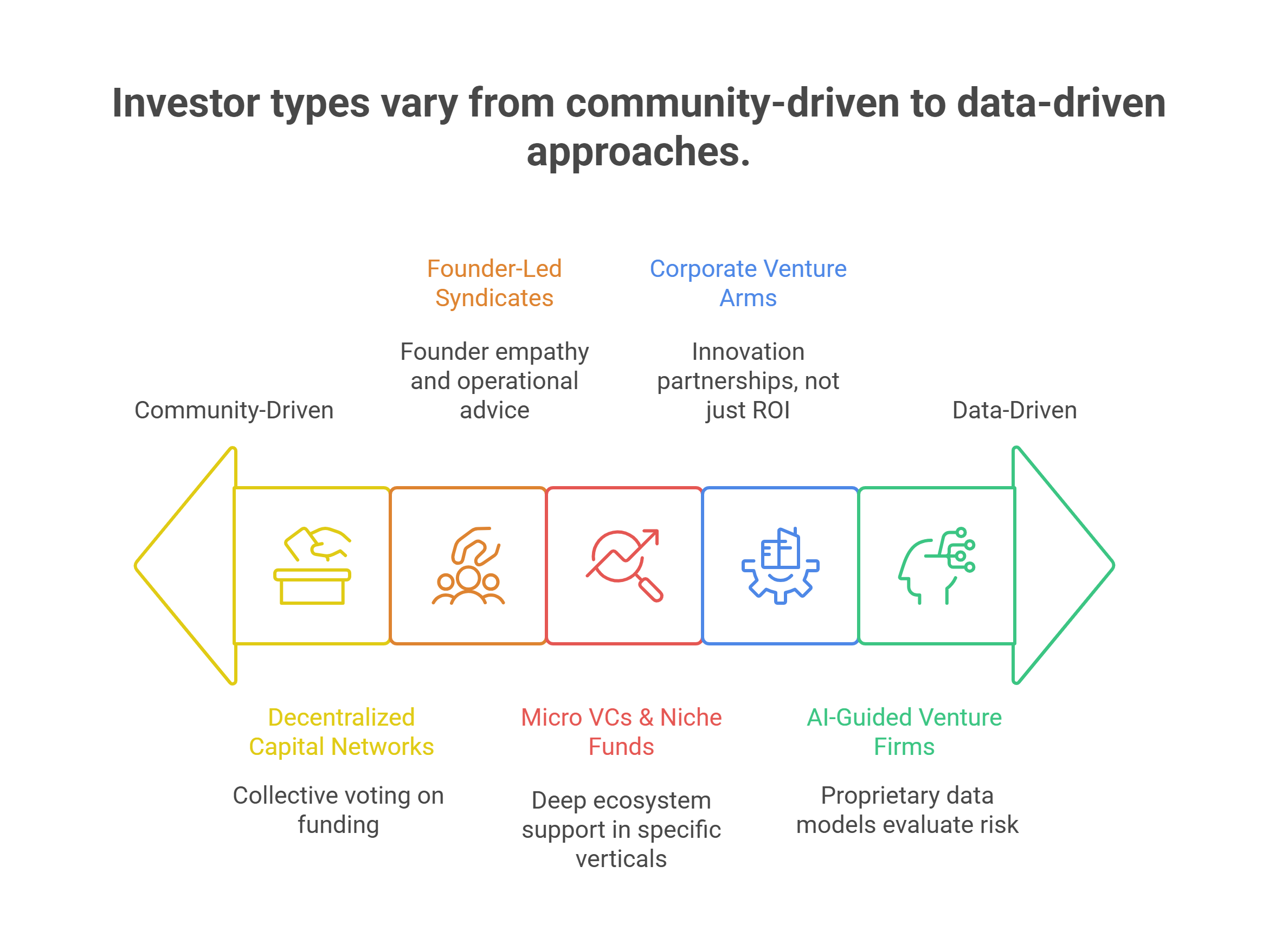
- AI-Guided Venture Firms: Use proprietary data models to evaluate risk, market fit, and founder capabilities. They move fast but demand clarity.
- Micro VCs & Niche Funds: Specialize in verticals (e.g., climate tech, femtech, AI for health) and offer deep ecosystem support.
- Founder-Led Syndicates: Groups of exited founders investing in early-stage companies with founder empathy and operational advice.
- Corporate Venture Arms: Strategic investors looking for innovation partnerships, not just ROI.
- Decentralized Capital Networks: Tokenized communities or DAOs that vote on startup funding as a collective.
How to Match the Right Investor:
- If you’re pre-revenue, focus on founder-friendly angels, syndicates, or early seed specialists.
- If you’re scaling rapidly, align with funds that have follow-on capabilities and global expansion experience.
- For deep tech or research-led products, seek institutional partners with long-view capital and technical advisors.
Understanding who you’re pitching is as important as what you’re pitching. The right investor doesn’t just fund you—they fuel your mission.
3. Crafting a 2030-Ready Pitch That Converts

The classic slide deck is no longer enough. In 2030, investors expect interactive pitch environments, real-time data dashboards, and founder transparency. More than a story, your pitch must be a proof-backed argument for why your startup is inevitable.
Key Elements of a Modern Pitch:
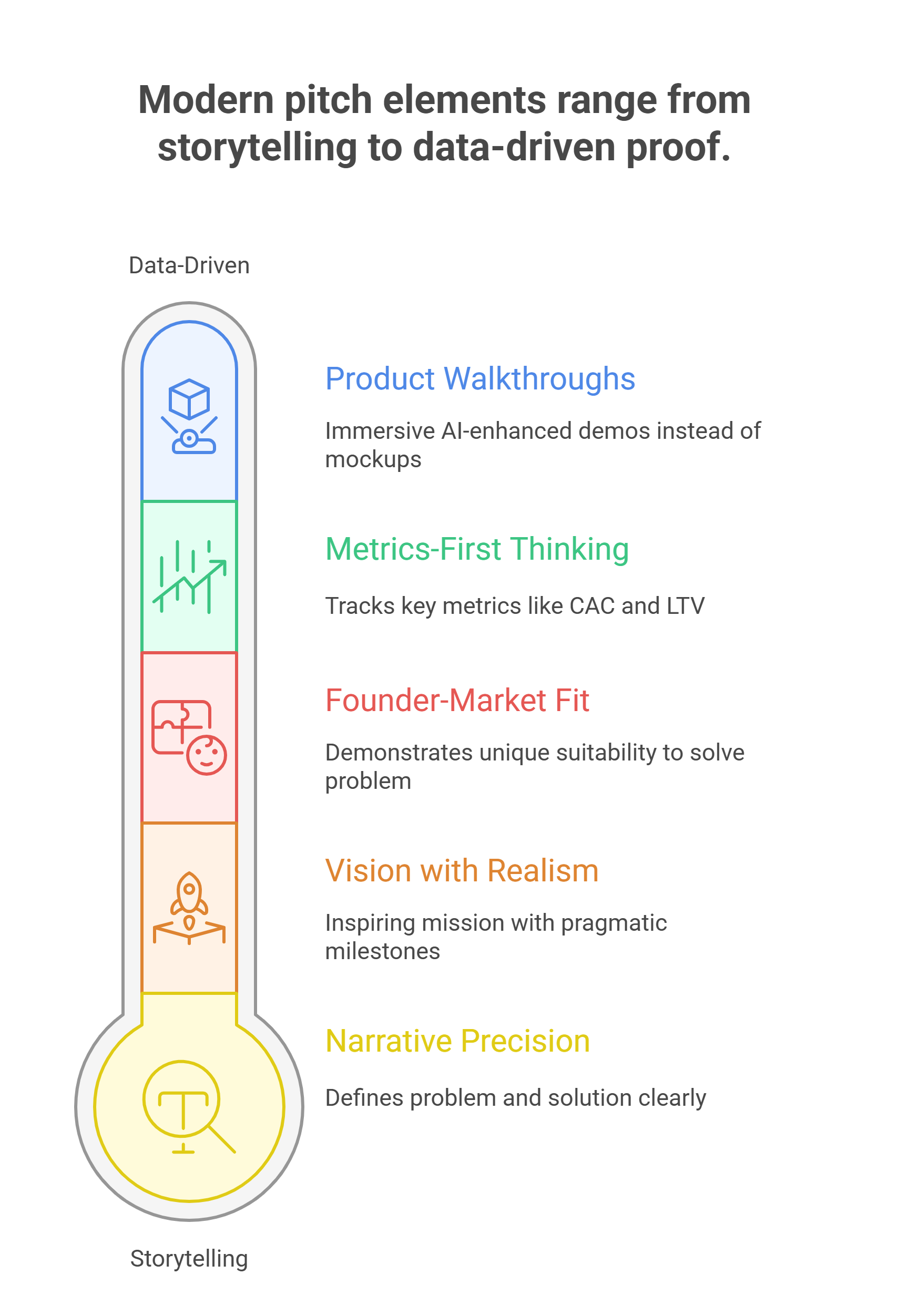
- Narrative Precision: Clearly define the problem, the job your solution does, and why now is the moment to solve it.
- Vision with Realism: Show an inspiring mission backed by pragmatic milestones and traction data.
- Founder-Market Fit: Demonstrate why you are the best person to solve this problem at scale.
- Metrics-First Thinking: CAC, LTV, churn, engagement loops—investors want to see you're tracking what matters.
- Product Walkthroughs: Use immersive, AI-enhanced demos instead of static mockups.
In a pitch room, the founder who communicates decisiveness, clarity, and adaptability wins. You must know your numbers, your users, your runway, and your edge—cold.
4. Leveraging AI and Digital Tools for Fundraising Success

By 2030, capital raising isn’t just about relationships—it’s about systems. Founders now have access to AI-powered tools that optimize fundraising like never before. From deal sourcing to pitch automation, the landscape is full of digital leverage.
Essential Tools for Smart Fundraising:
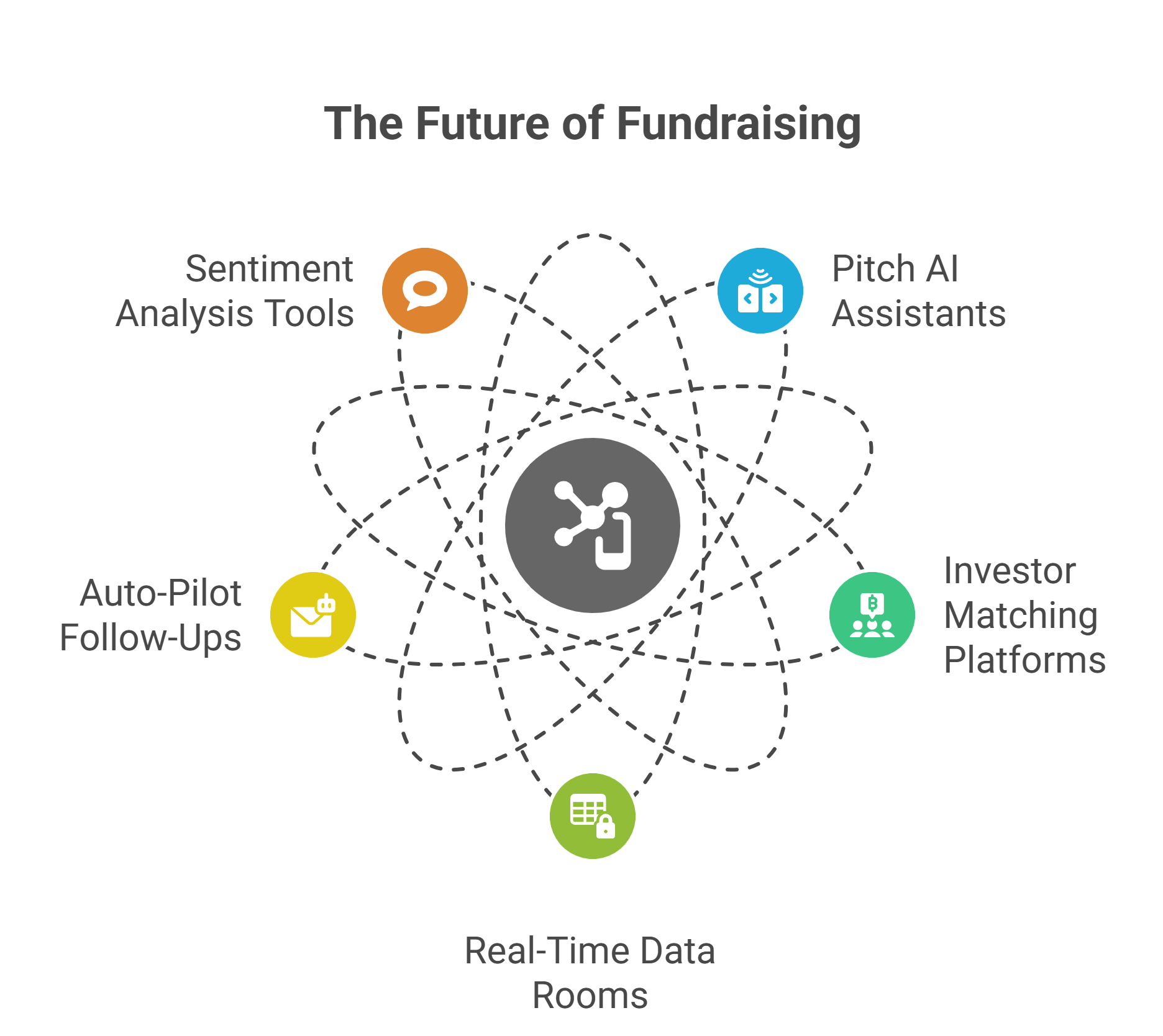
- Pitch AI Assistants: These tools rewrite, structure, and personalize your pitch materials based on investor preferences.
- Investor Matching Platforms: Platforms like SignalFire AI or PitchSync match founders with investors based on mutual fit and funding goals.
- Real-Time Data Rooms: Secure dashboards give investors instant access to updated metrics, customer testimonials, and traction graphs.
- Auto-Pilot Follow-Ups: AI email sequences that follow up with investors, track engagement, and adjust tone based on interest signals.
- Sentiment Analysis Tools: Gauge how well your pitch lands in real time—voice tone, attention span, question frequency—via video calls.
These tools don’t replace the human relationship—but they amplify your preparation and sharpen your edge. In a market where timing and clarity matter, tech gives you the upper hand.
5. Alternative Funding Paths Beyond Traditional VCs

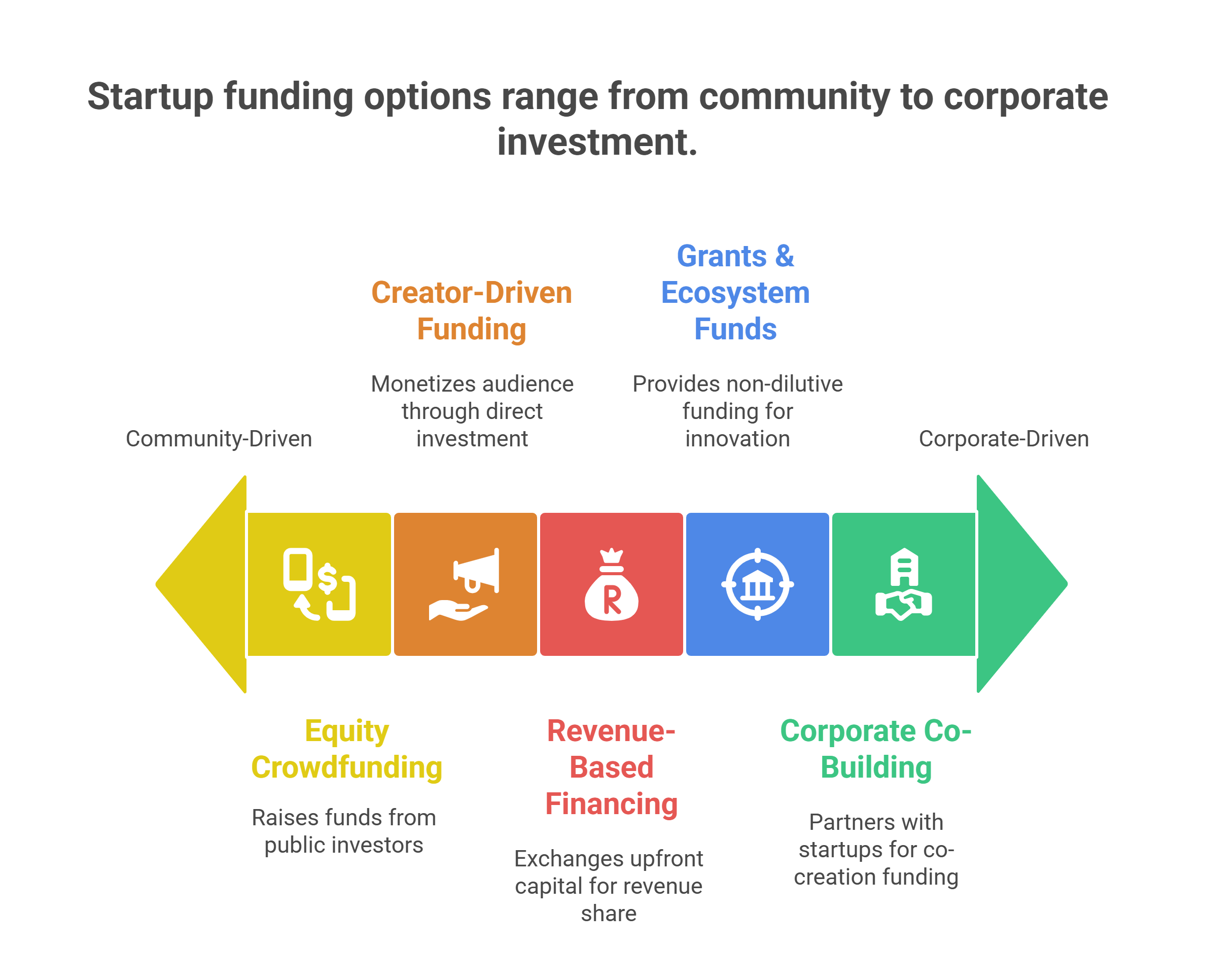
Founders in 2030 are not just pitching VCs—they're crafting diverse funding stacks that maximize optionality and reduce dilution. From community capital to creator monetization, smart founders now explore multiple roads to scale.
Non-VC Capital Options:
- Revenue-Based Financing (RBF): Get upfront capital in exchange for a share of future revenues, not equity.
- Equity Crowdfunding: Platforms like Seedrs 2030 or AngelDAO let everyday people invest in startups they believe in.
- Creator-Driven Funding: If you have an audience, platforms allow direct monetization or community-based investment models.
- Grants & Ecosystem Funds: Governments, tech platforms, and blockchain ecosystems fund innovation in priority sectors—non-dilutive and mission-aligned.
- Corporate Co-Building: Some large enterprises now partner with startups via co-creation funding models.
The key is to choose funding that aligns with your runway, your goals, and your values. Don’t just follow the hype—build a capital stack that gives you leverage, not just logos.
Join the Founder MBA 2030: Build Fast. Scale Smart.

Mastering capital raising in 2030 isn’t just about knowing the jargon—it’s about strategic execution. That’s exactly what the Founder MBA 2030 delivers.
In this intensive founder-first course, you'll learn:
- How to pitch with clarity, data, and purpose
- How to use AI tools to source and close smart capital
- How to build a funding strategy aligned with growth, not just valuation
- How to navigate the modern investor landscape with confidence
Join a global community of builders, backed by investor insights, case studies, and practical templates that turn fundraising into a growth engine.
Don’t raise capital blindly. Raise it brilliantly.
Frequently Asked Questions
1. Is venture capital still the best way to fund a startup in 2030?
Not always. VCs are one of many funding paths. Smart founders explore a mix of equity, non-dilutive, and strategic capital sources based on their goals.
2. How much should I raise in my seed round in 2030?
It depends on your runway needs. Founders should reverse-engineer the raise based on 18–24 months of key milestones—not vanity metrics.
3. What metrics do investors care most about today?
Unit economics (CAC/LTV), retention, growth velocity, and founder-market fit are still king. But in 2030, transparency and product traction matter even more.
4. Can I raise capital without a strong network?
Yes, especially with AI-driven investor platforms and crowdfunding tools. But warm intros still increase conversion—so build relationships as early as possible.
5. Should I bootstrap instead of raising funding?
If your model allows it, bootstrapping can preserve equity and increase leverage. But high-growth models may benefit from external capital for faster execution.
Written By
Critical Legal Writer Intern at BISJHINTUS, English Honours (Gold Medalist) / LL.B.

Designed By
UI/UX Designer at BISJHINTUS

Share this post:
Leave a comment
Your email address will not be published. Required fields are marked *
Write a Review
Related Posts

Examine the advantages and disadvantages of global expansion versus local domination for startups in...
Discover the five most powerful startup frameworks that are transforming how founders build and scal...
