

How To Start a Cybersecurity Career in 2025: A Beginner's Guide
-
Home
-
Cybersecurity
-
How To Start a Cybersecurity Career in 2025: A Beginner's Guide

How To Start a Cybersecurity Career in 2025: A Beginner's Guide
Discover how to start a cybersecurity career in 2025 with no experience. This comprehensive beginner's guide covers essential skills, certifications, tools, and job opportunities, as well as how to get started.


Table of Content
-
Why Cybersecurity Is the Career of the Future
-
Who Should Consider a Cybersecurity Career?
-
Step 1: Understand the Cybersecurity Landscape
-
Step 2: Choose Your Cybersecurity Career Path
-
Step 3: Learn the Fundamental Skills
-
Step 4: Get Certified (Even Without a Tech Degree)
-
Step 5: Build Practical Experience (Labs, Projects, Internships)
-
Step 6: Create a Cybersecurity Portfolio That Stands Out
-
Step 7: Prepare for Your First Cybersecurity Job
-
Tools and Resources Every Beginner Should Use
-
Common Challenges for Beginners and How to Overcome Them
-
Career Growth Opportunities and Salaries in 2025
-
How Our Cybersecurity Course at Bisjhintus Helps You Start
-
FAQs

Why Cybersecurity Is the Career of the Future
In an age where every digital interaction—from online banking to social media—is vulnerable to cyber threats, cybersecurity has emerged as one of the most essential professions in the world. As of 2025, cyberattacks are not only more frequent but also more complex, targeting critical infrastructure, businesses, and individuals alike.
Organizations across industries are increasing their cybersecurity budgets and urgently hiring talent to defend against threats like ransomware, data breaches, and insider attacks. According to global reports, there will be more than 3.5 million unfilled cybersecurity jobs globally in 2025.
For those seeking a stable, impactful, and high-paying career, cybersecurity offers an unmatched opportunity, especially for beginners willing to learn. This guide walks you step-by-step through how to start a cybersecurity career in 2025, even if you have zero experience or a non-tech background.
Who Should Consider a Cybersecurity Career?

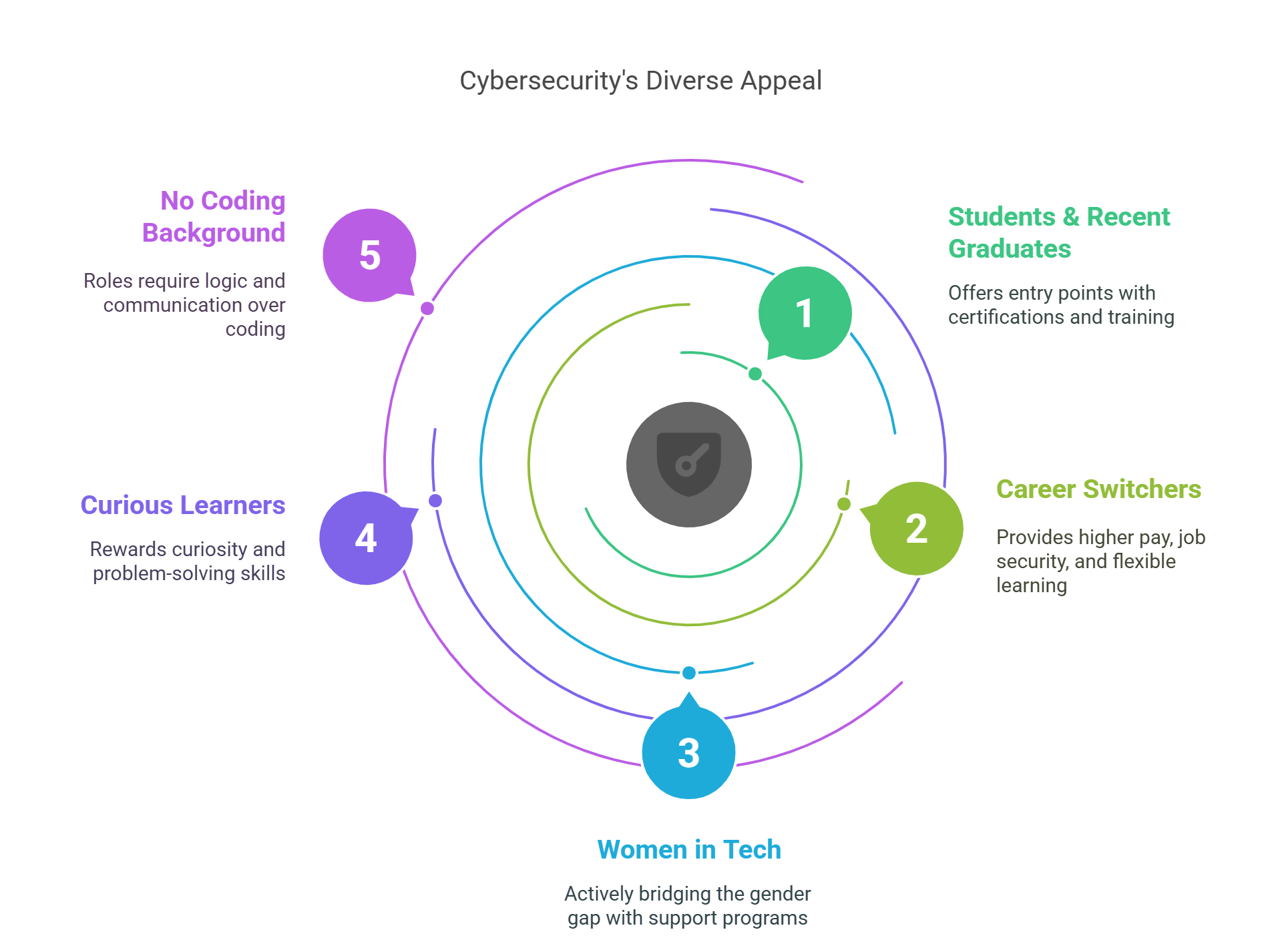
Cybersecurity is no longer a niche reserved for hackers or IT geniuses. In 2025, the field is broad and welcoming—ideal for:
Students & Recent Graduates
Whether you're from engineering, law, commerce, or even the arts, cybersecurity offers multiple entry points with certifications and practical training.
Career Switchers
Are you working in customer service, administration, marketing, or any non-tech job? Many professionals are transitioning to cybersecurity roles because of higher pay, job security, and flexible learning options.
Women in Tech
The industry is actively working to bridge the gender gap. Women-focused cybersecurity scholarships, mentorships, and networking events are increasingly common.
Curious Learners
Cybersecurity rewards curiosity, problem-solving, and logical thinking. If you're intrigued by how systems work and how they can be protected, this career may be perfect for you.
No coding background? No problem. Many roles in cybersecurity—like compliance, risk analysis, or GRC (Governance, Risk, and Compliance)—require more logic and communication than advanced programming.
Step 1: Understand the Cybersecurity Landscape

Before diving into tools or certifications, it's crucial to get a big-picture view of what cybersecurity actually involves. Think of it as a vast field with many “departments,” each solving a different type of security problem.
Key Areas in Cybersecurity:
- Network Security – Protects computer networks from unauthorized access.
- Application Security – Secures software and apps during development.
- Cloud Security – Protects data stored in cloud environments like AWS or Azure.
- Information Security – Ensures confidentiality, integrity, and availability of data.
- Operational Security – Covers policies, procedures, and day-to-day operations.
- Disaster Recovery & Business Continuity – Ensures recovery from cyberattacks or data loss.
- Penetration Testing & Ethical Hacking – Simulates attacks to find system weaknesses.
- Digital Forensics – Investigates cybercrimes and tracks digital footprints.
- GRC (Governance, Risk, Compliance) – Ensures companies follow security laws and standards.
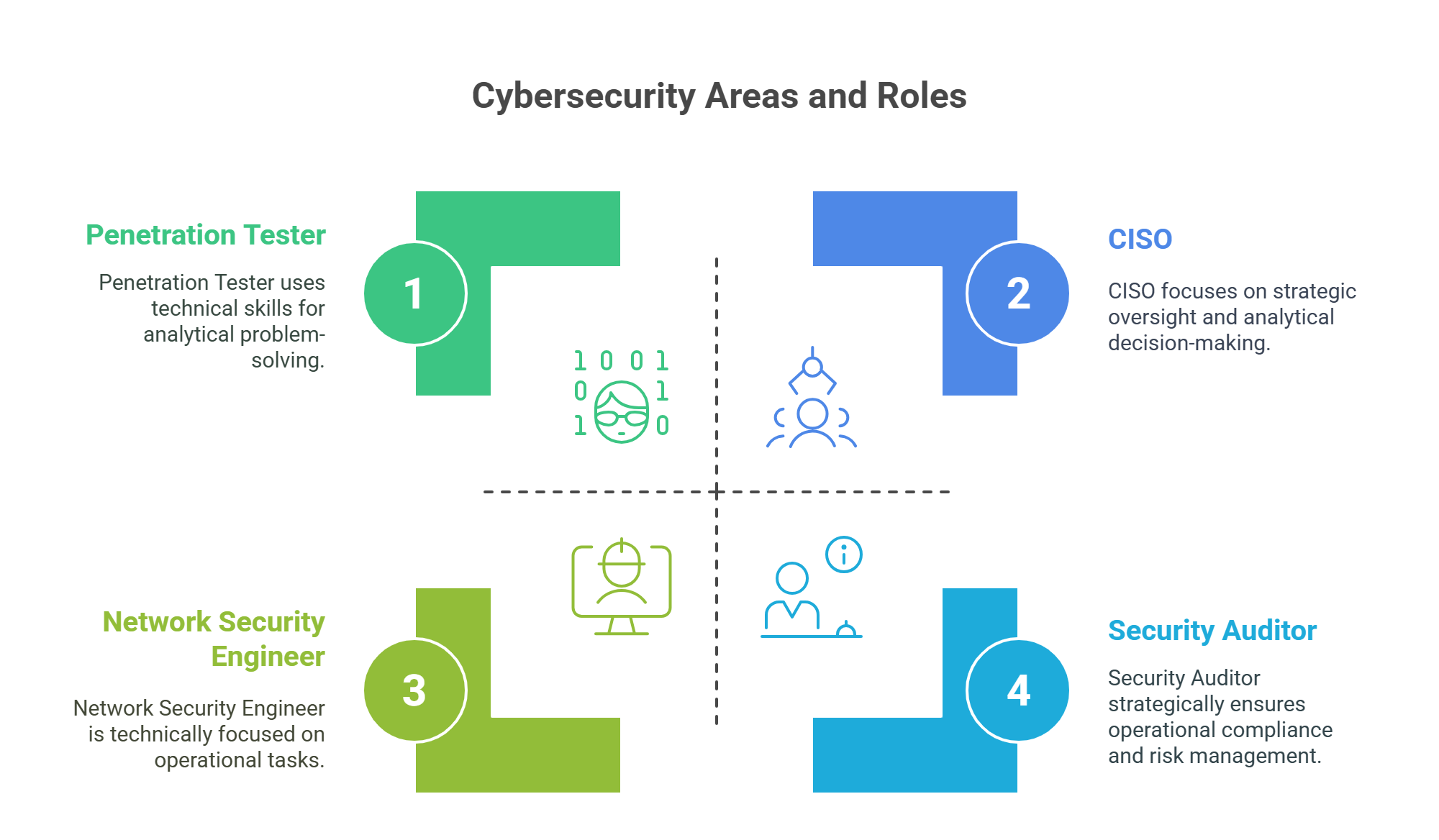
Cybersecurity Roles You’ll Hear Often:
- Cybersecurity Analyst
- Penetration Tester
- Cloud Security Engineer
- Security Auditor
- Security Architect
- Incident Response Specialist
- Chief Information Security Officer (CISO)
Each role has its own skillset and certifications, and you don’t need to master everything at once. In the next section, we’ll help you choose the right path for YOU.
Step 2: Choose Your Cybersecurity Career Path

Cybersecurity isn’t a one-size-fits-all career. There are technical, semi-technical, and even non-technical roles to choose from. The key is to align your strengths and interests with the right path.
Popular Beginner-Friendly Paths:
Path | Best For | Focus Area |
Cybersecurity Analyst | Detail-oriented, logical thinkers | Monitoring & incident response |
Ethical Hacker | Curious, creative minds | Penetration testing |
Cloud Security Engineer | Tech-savvy learners | AWS, Azure, GCP security |
GRC Analyst | Non-tech/management backgrounds | Policy, audit, compliance |
Security Operations Center (SOC) Analyst | Fast learners, team players | Real-time threat analysis |
Start with what aligns with your current background and grow into more advanced areas as you progress.
Step 3: Learn the Fundamental Skills

Before certifications or job applications, build foundational skills that are universally relevant in cybersecurity.
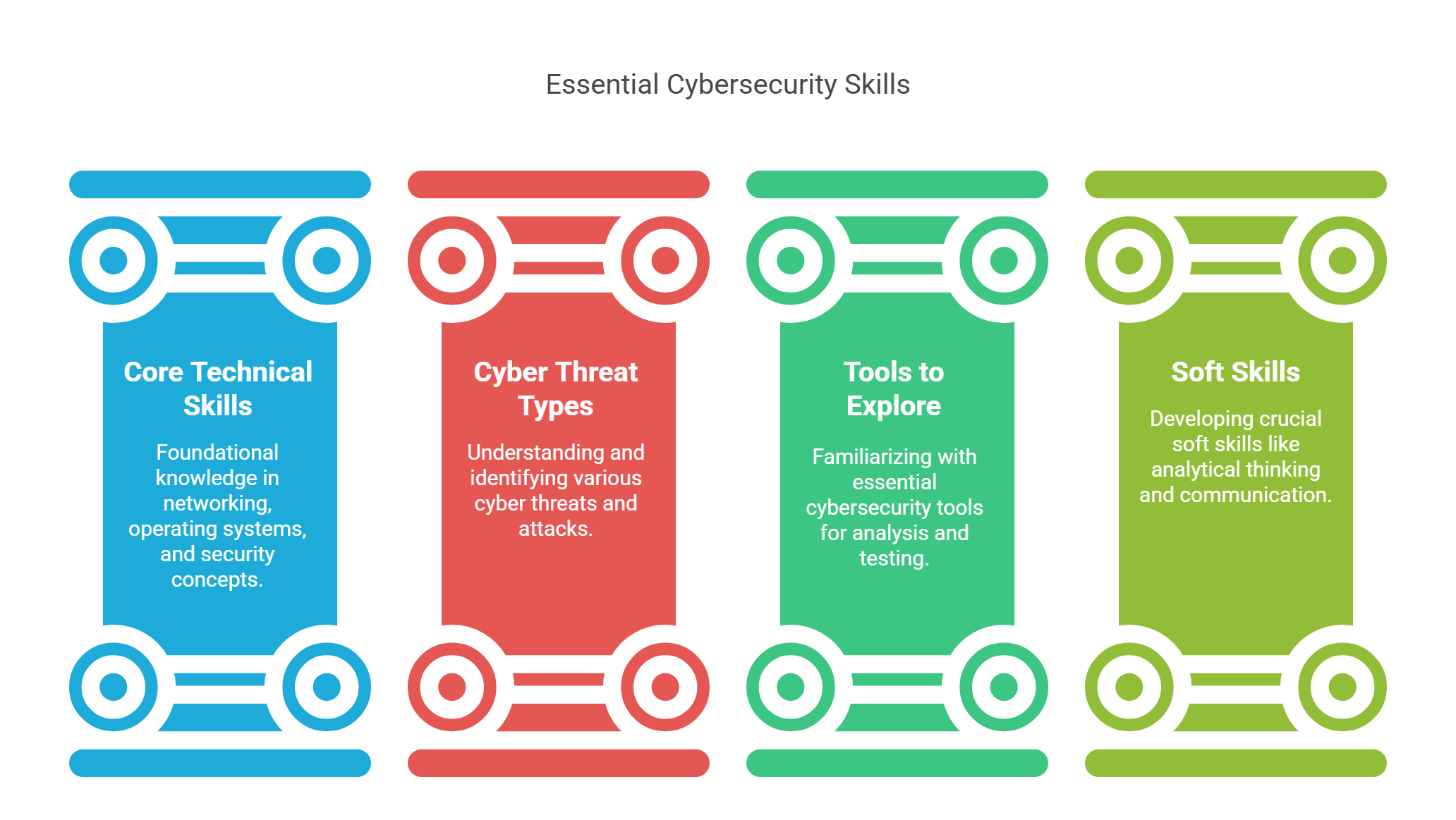
Core Technical Skills:
- Networking Basics – Learn TCP/IP, DNS, firewalls, VPNs
- Operating Systems – Focus on Linux, Windows, and Mac environments
- Security Concepts – Confidentiality, integrity, and availability (CIA Triad)
- Cyber Threat Types – Malware, phishing, ransomware, DoS/DDoS attacks
- Tools to Explore – Wireshark, Nmap, Burp Suite, Metasploit
Soft Skills That Matter:
- Analytical thinking
- Attention to detail
- Communication (for report writing and presenting findings)
- Problem-solving
You can learn these skills through YouTube, Udemy, Coursera, or our structured course at Bisjhintus (detailed later).
Step 4: Get Certified (Even Without a Tech Degree)

Certifications validate your knowledge and help you stand out in job applications, especially when you don’t have a degree in computer science.
Recommended Beginner Certifications:
Certification | Best For | Recognized By |
CompTIA Security+ | Absolute beginners | Global |
CEH (Certified Ethical Hacker) | Ethical hacking path | EC-Council |
Cisco CCNA Security | Network security for beginners | IT companies |
Microsoft SC-900 | Cloud and identity security | Enterprises |
Focus on one certification at a time. Most can be completed in 3–6 months with proper guidance and practice.
Step 5: Build Practical Experience (Labs, Projects, Internships)

Cybersecurity is a hands-on field. Employers love candidates who’ve practiced, not just memorized theory.
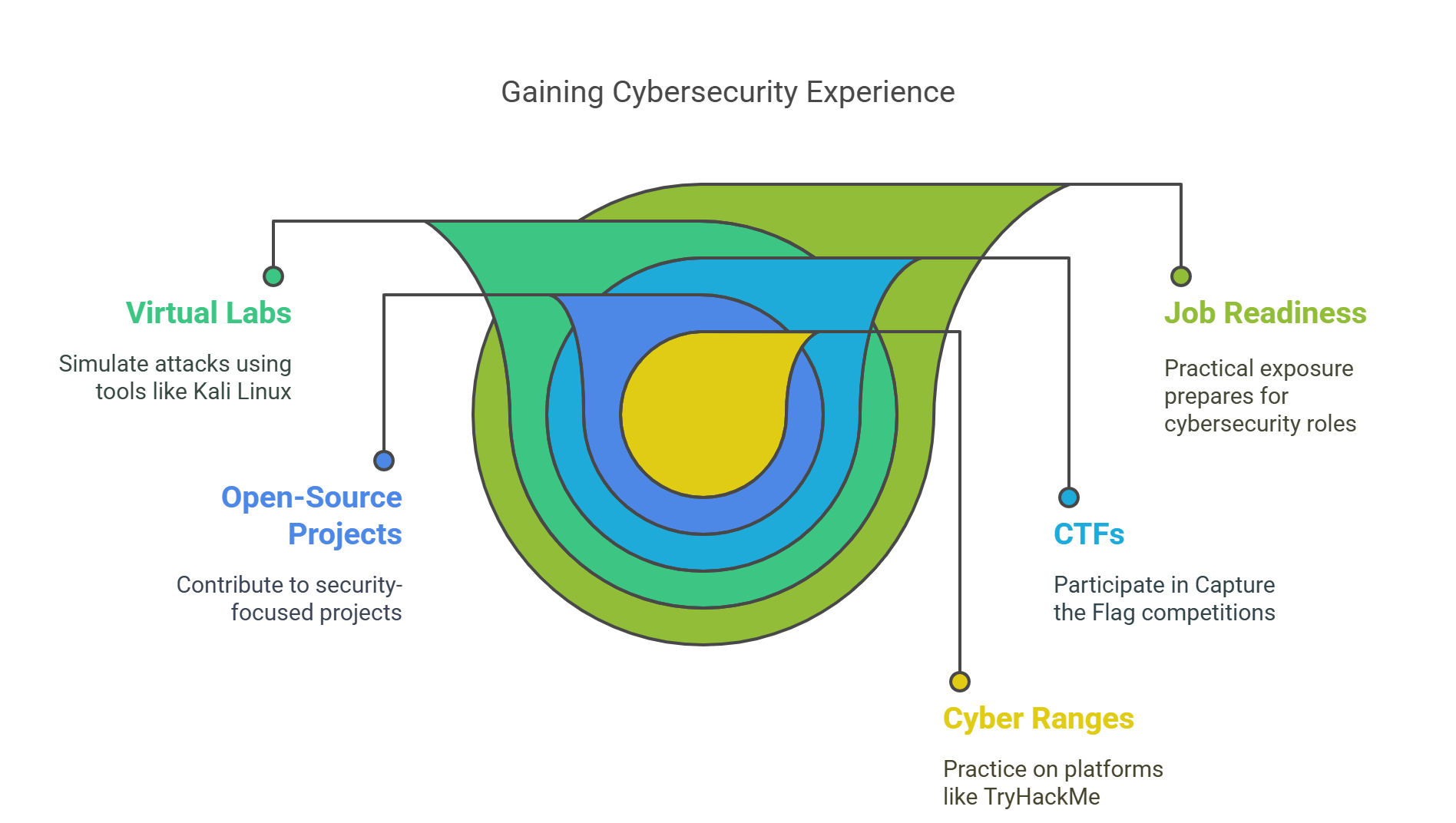
How to Gain Experience:
- Join Cyber Ranges like TryHackMe, Hack The Box, or RangeForce
- Contribute to Open-Source Security Projects
- Participate in CTFs (Capture the Flag competitions)
- Simulate Attacks in Virtual Labs (Kali Linux, VirtualBox, etc.)
- Apply for Remote Internships or Volunteer Projects
Practical exposure makes you job-ready and helps you discover what excites you most in cybersecurity.
Step 6: Create a Cybersecurity Portfolio That Stands Out

Your portfolio is your cybersecurity resume. It tells recruiters, “I don’t just know stuff—I’ve done stuff.”
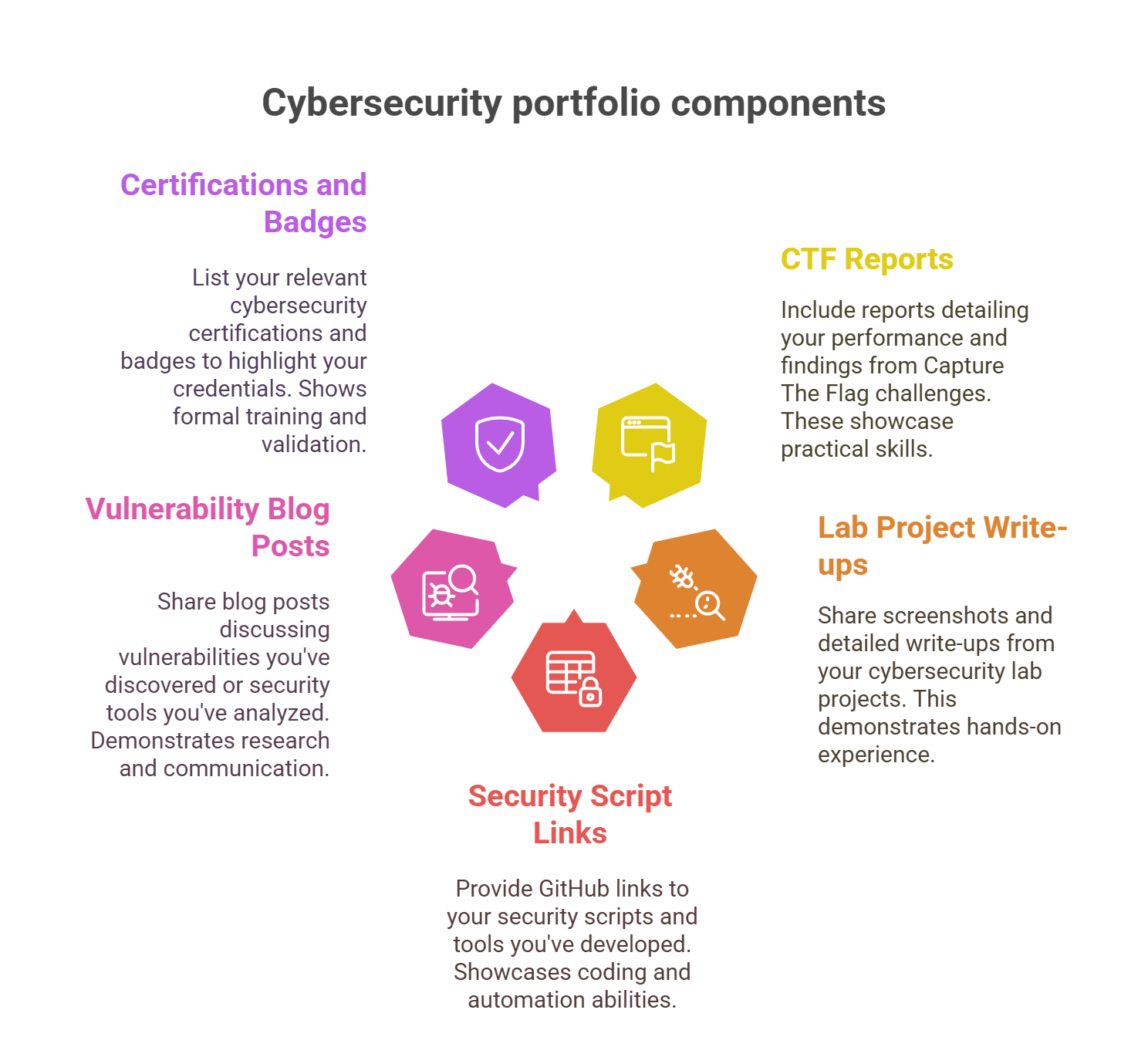
What to Include in Your Portfolio:
- Reports from CTF challenges
- Screenshots and write-ups from lab projects
- GitHub links to security scripts/tools
- Blog posts on vulnerabilities or tools
- Certifications and badges
Use platforms like GitHub, Medium, LinkedIn, and a personal website (even a free one) to showcase your work.
Step 7: Prepare for Your First Cybersecurity Job

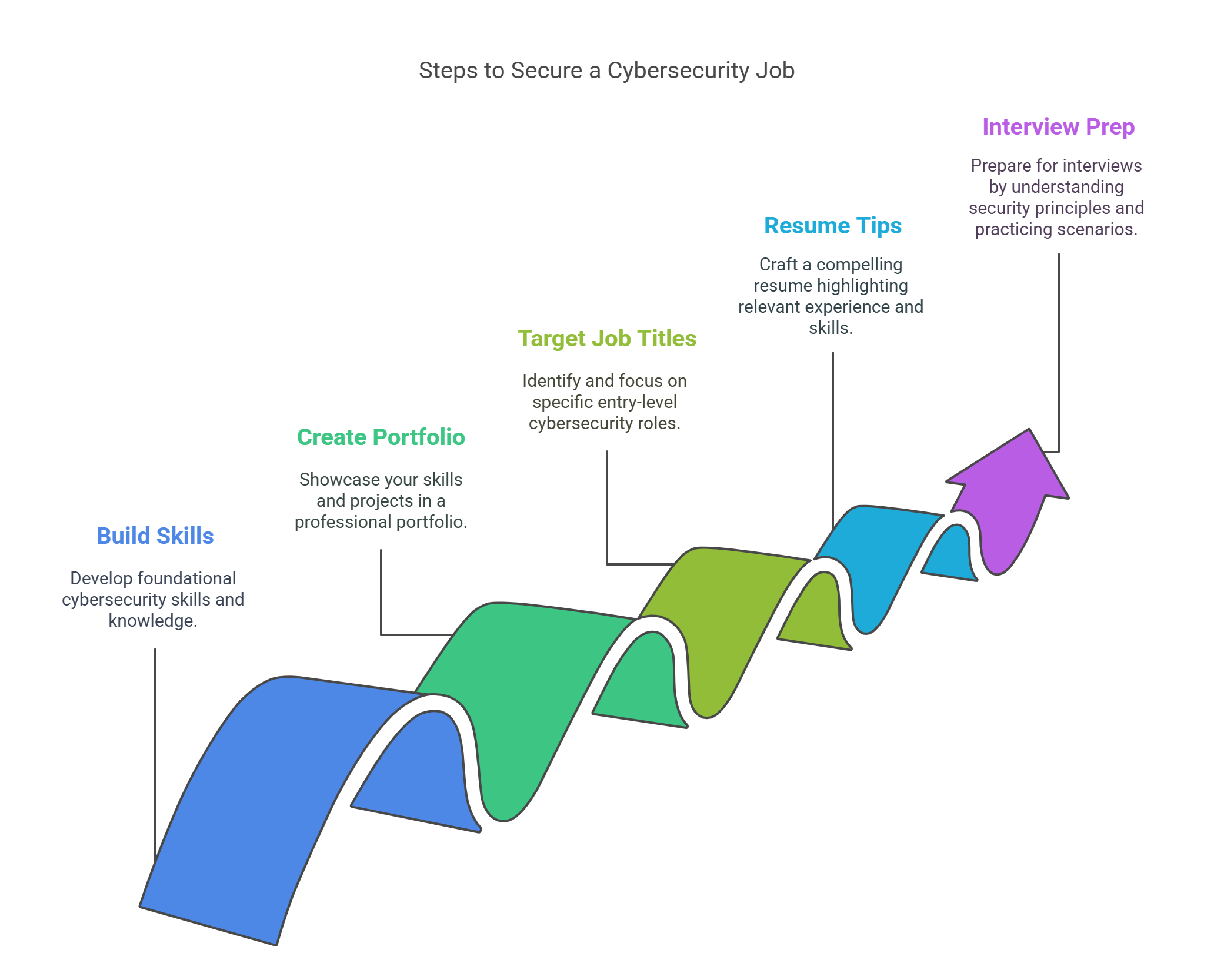
Once you’ve built skills and a portfolio, it’s time to job hunt strategically.
Job Titles to Target:
- Cybersecurity Trainee
- SOC Analyst (L1)
- Junior Pentester
- Security Research Assistant
- GRC Intern
- IT Support (with security focus)
Resume Tips:
- Use action verbs (“Analyzed”, “Deployed”, “Secured”)
- Mention lab experience and certifications
- Include links to portfolio/blogs
- Customize for each job role
Interview Prep:
- Understand basic security principles
- Prepare for scenario-based questions (e.g., “How would you secure a login system?”)
- Practice with mock interviews
Tools and Resources Every Beginner Should Use

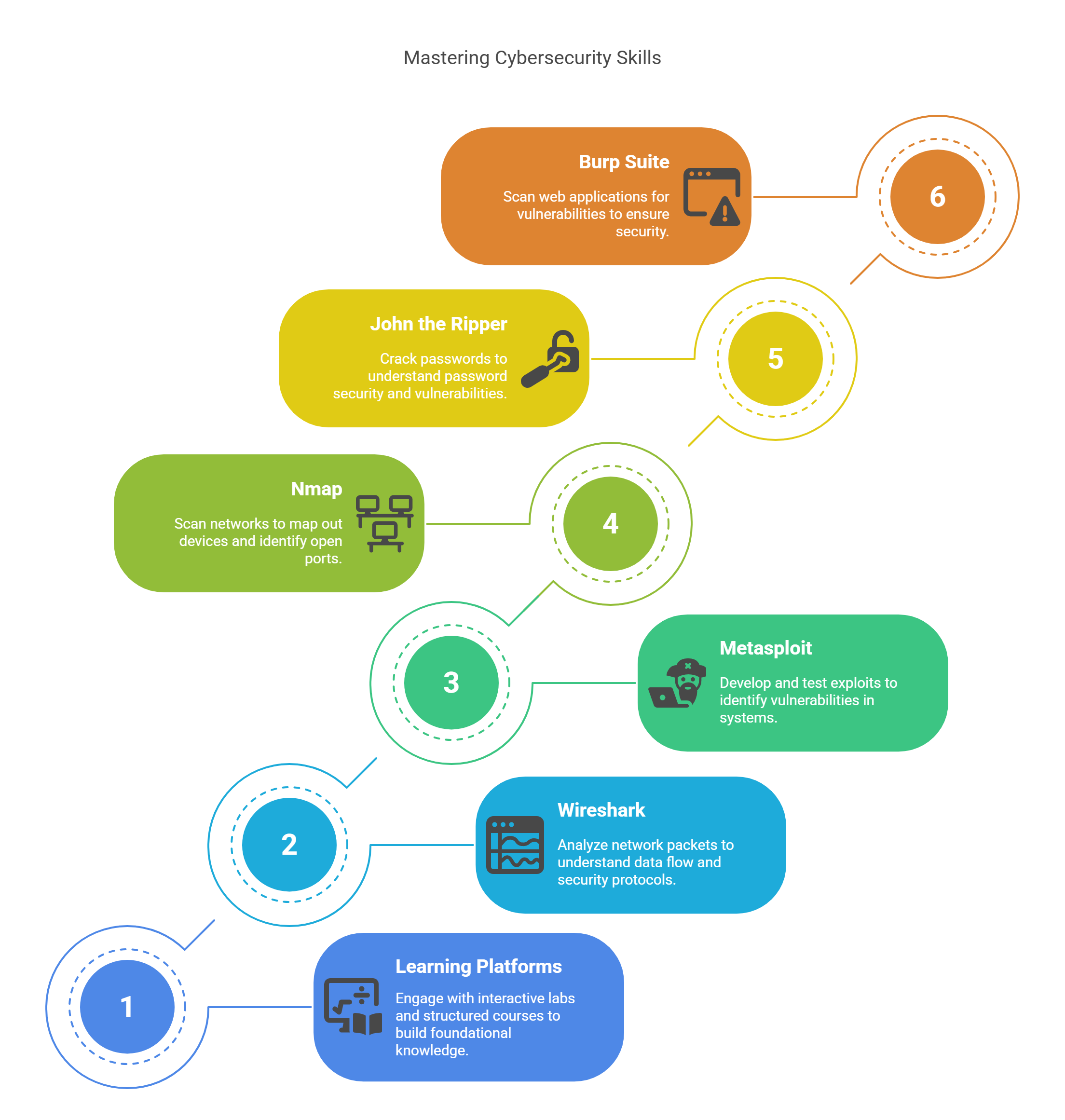
The right tools accelerate your learning curve. Here’s a curated list:
Learning Platforms:
- TryHackMe (interactive labs)
- Coursera, Udemy, edX (structured courses)
- Cybrary (certification prep)
- OWASP.org (web app security)
Tools to Explore:
- Wireshark (packet analysis)
- Metasploit (exploit development)
- Nmap (network scanning)
- John the Ripper (password cracking)
- Burp Suite (web vulnerability scanner)
Use these regularly to build hands-on competence.
Common Challenges for Beginners and How to Overcome Them

Challenge | Solution |
“I’m not from a tech background.” | Start with GRC, helpdesk, or security analyst roles |
“Too many tools and paths” | Follow one structured roadmap at a time |
“Imposter syndrome” | Everyone starts somewhere—build confidence by doing |
“No job calls” | Improve resume, add portfolio links, and build LinkedIn presence |
Cybersecurity has a learning curve, but with the right mindset and guidance, anyone can make it.
Career Growth Opportunities and Salaries in 2025

Cybersecurity roles are among the best-paying jobs in tech today, and the demand keeps growing.
Role | Avg. Salary (India) | Global Opportunities? |
Cybersecurity Analyst | ₹7–12 LPA | Yes |
Ethical Hacker | ₹6–15 LPA | Yes |
Cloud Security Engineer | ₹12–20 LPA | Yes |
GRC Specialist | ₹6–10 LPA | Yes |
Incident Responder | ₹10–18 LPA | Yes |
Chief Information Security Officer (CISO) | ₹30–80 LPA | Yes |
As AI and cloud adoption grow, cybersecurity professionals will be in even greater demand.
How Our Cybersecurity Course at Bisjhintus Helps You Start

At Bisjhintus, we believe career transformation should be accessible and practical. Our Cybersecurity Course is designed with beginners in mind.
Why Our Course Stands Out:
- Covers everything from basics to advanced (SOC, Ethical Hacking, GRC)
- Hands-on labs and simulated attacks
- Access to exclusive career bootcamps
- Real-world project experience
- CEH and Security+ preparation
- Resume + LinkedIn + Interview support
- Flexible online learning with expert mentors
FAQs

1. Can I learn cybersecurity without coding?
Yes. Many roles like GRC analyst, cybersecurity policy advisor, or SOC analyst don’t require deep coding knowledge.
2. What is the first step for beginners?
Start by learning about networking and basic cybersecurity concepts using free resources or structured courses.
3. How long does it take to get job-ready?
With focused learning and a good course, you can be job-ready in 4–6 months.
4. Are there remote jobs in cybersecurity?
Absolutely. Many companies now hire remote SOC analysts, ethical hackers, and compliance officers.
5. What’s the best certification to begin with?
CompTIA Security+ and CEH are globally recognized and great for beginners.
Written By
Critical Legal Writer Intern at BISJHINTUS, English Honours (Gold Medalist) / LL.B.

Designed By
UI/UX Designer at BISJHINTUS

Share this post:
Leave a comment
Your email address will not be published. Required fields are marked *
Write a Review
Related Posts

Explore the key differences between cloud security and network security in 2025. Learn about skills,...

Explore 7 high-demand cybersecurity jobs in 2025 and learn how the Bisjhintus Cybersecurity Course c...
