

Comparison Between AI Tools and Human Workers in 2025: Can They Coexist?
-
Home
-
Business Automation
-
Comparison Between AI Tools and Human Workers in 2025: Can They Coexist?

Comparison Between AI Tools and Human Workers in 2025: Can They Coexist?
Explore a detailed comparison of AI tools vs. human workers in 2025. Learn their differences, strengths, and how they can coexist in the modern workplace.

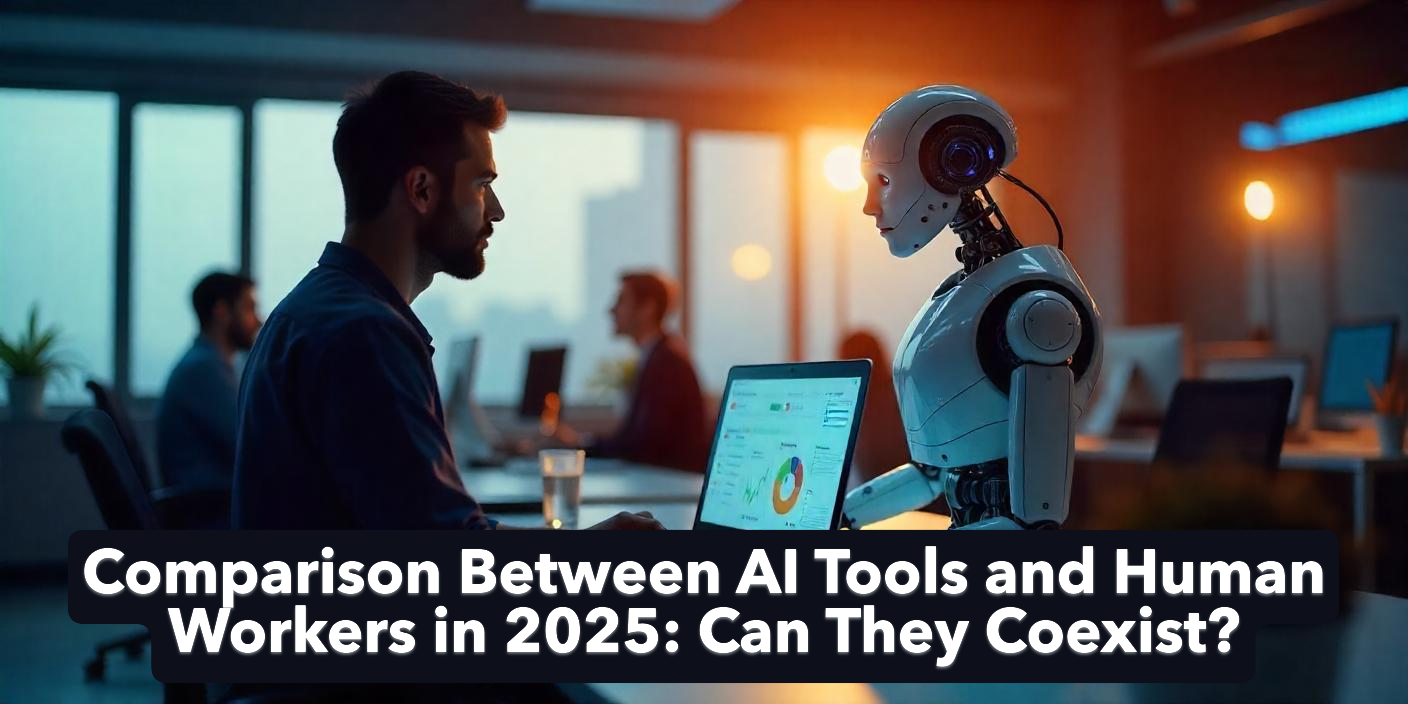
Table of Content
-
The New Reality of Work: Humans & AI Together
-
Understanding AI Tools: What They Do and Don’t Do
-
The Human Advantage: What Machines Still Can’t Replace
-
AI in Action: Real-World Use Cases and Industries
-
Key Differences Between AI Tools and Human Workers
-
The Coexistence Model: How Businesses Are Merging the Two
-
Risks and Limitations of Relying Too Much on AI
-
Reimagining the Workplace in 2025
-
Preparing for an AI-Integrated Career
-
Where Do We Go From Here?
-
FAQs – Your Questions Answered
-
Future-Proof Your Career with Automation

The New Reality of Work: Humans & AI Together
The workplace in 2025 has become a hybrid ecosystem where AI tools and human workers function side by side. Artificial Intelligence is no longer a novelty—it’s a necessity. From intelligent chatbots handling customer queries to AI algorithms managing inventory and predictive analytics, these tools are everywhere.
However, as automation and AI tools become smarter, faster, and more intuitive, a critical question arises: Can AI tools and human workers truly coexist—or is one destined to replace the other?
This article provides a detailed, well-balanced comparison between what AI tools bring to the table and the unique value of human workers. It explores their strengths, weaknesses, and future roles to help businesses, professionals, and policymakers make better decisions.
1. Understanding AI Tools: What They Do and Don’t Do

AI tools are designed to replicate, accelerate, or replace specific cognitive or physical tasks through machine learning, data analytics, natural language processing (NLP), or computer vision. In 2025, AI tools are more refined than ever, commonly used to:
- Analyze large datasets faster than any human could
- Make real-time decisions in dynamic systems (e.g., traffic, finance)
- Write basic content, emails, or even generate code
- Interact with customers via intelligent chatbots
- Detect anomalies or patterns in security or behavior
But what can’t AI do?
AI is task-specific. It lacks general intelligence, empathy, ethical judgment, and true creativity. AI doesn’t “understand” context in a human way; it predicts based on data patterns. It also requires human oversight, fine-tuning, and ethical supervision.
So while AI tools are powerful accelerators of productivity, they are not replacements for human consciousness, moral reasoning, or interpersonal nuance.

2. The Human Advantage: What Machines Still Can’t Replace
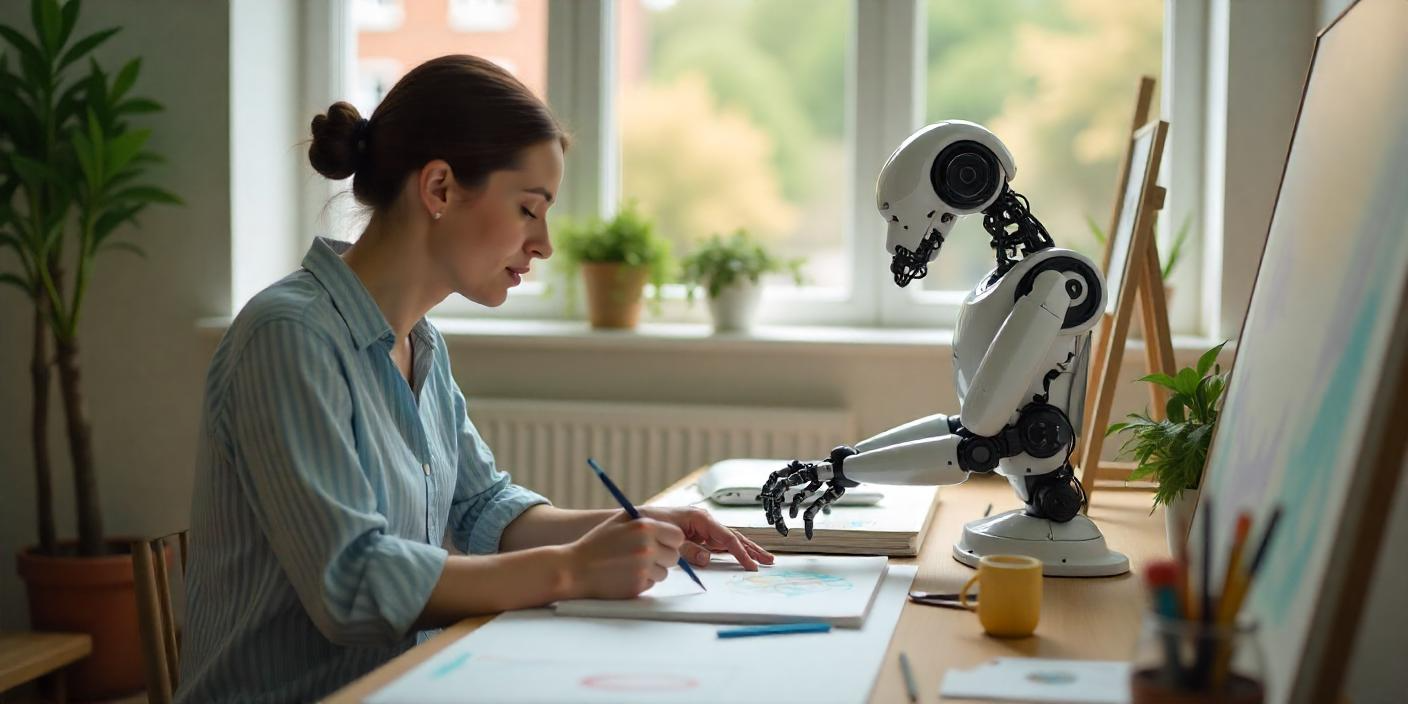
Despite all advancements, human workers still offer something AI cannot replicate—at least not yet. These include:
- Emotional Intelligence: Humans can read subtle emotional cues, express compassion, and respond empathetically in ways AI cannot match.
- Ethical Reasoning: Human workers make morally guided decisions, especially important in law, healthcare, and education.
- Adaptability: When faced with unstructured, ambiguous, or unfamiliar challenges, humans innovate creatively.
- Cultural Sensitivity: Humans understand social norms, linguistic subtext, and local cultures that AI often misinterprets.
- Teamwork and Leadership: Humans build relationships, inspire others, and make collective progress.
Human input is especially essential when the task is subjective, interpersonal, or emotionally charged.

3. AI in Action: Real-World Use Cases and Industries

Let’s examine how AI tools and human workers currently interact across key industries:
A. Healthcare
- AI: Scans X-rays, detects anomalies, and automates administrative billing.
- Human: Doctors provide bedside manner, diagnosis interpretation, and emotional care.
B. Marketing
- AI: Analyzes customer behavior, automates emails, and A/B tests.
- Human: Crafts brand voice, develops campaign strategies, builds creative narratives.
C. Finance
- AI: Detects fraud, forecasts markets, and automates trading.
- Human: Evaluates risk, offers tailored financial advice, ensures regulatory compliance.
D. Customer Service
- AI: Chatbots handle common queries 24/7.
- Human: Resolves escalated issues, manages sensitive conversations, and provides judgment.
This synergy allows businesses to optimize efficiency without sacrificing the human touch.

4. Key Differences Between AI Tools and Human Workers

Criteria | AI Tools | Human Workers |
Speed | Ultra-fast | Relatively slower |
Creativity | Predictive | Original & abstract |
Emotional Intelligence | Lacking | Strong |
Decision-Making | Data-driven | Contextual & ethical |
Cost | One-time/decreasing | Ongoing (salaries) |
Flexibility | Task-specific | Cross-functional |
While AI excels at repetitive, rules-based tasks, humans thrive in complex, intuitive, and interpersonal roles. Each has strengths that the other lacks.
5. The Coexistence Model: How Businesses Are Merging the Two

Smart businesses are not choosing between humans or AI—they’re designing workflows that combine both. This blended model is called “Human-in-the-Loop AI.”
What it looks like:
- AI analyzes data; humans interpret it.
- AI automates tasks; humans strategize outcomes.
- AI predicts behavior; humans act on judgment.
For example, an AI tool might flag high-risk financial transactions, but a compliance officer decides the next steps. Similarly, a content generator might draft emails, but a marketer shapes the tone.
This coexistence leads to:
- Higher output with fewer errors
- Better work satisfaction (humans focus on meaningful tasks)
- Reduced burnout from repetitive work

6. Risks and Limitations of Relying Too Much on AI

While AI is a great asset, it comes with limitations and risks when not balanced by human oversight.
A. Ethical Concerns
Bias in algorithms can lead to unfair or discriminatory outcomes, especially in hiring or lending.
B. Overreliance
Businesses relying solely on AI may overlook exceptions, anomalies, or nuanced problems.
C. Data Dependency
Poor data input leads to flawed AI output. “Garbage in, garbage out.”
D. Job Displacement
While AI creates jobs, it also automates others. Lack of retraining can lead to workforce disruption.
E. Emotional Blind Spots
AI can’t replace human empathy, which is crucial in service industries and mental health care.
Organizations must use AI responsibly—as a tool, not a replacement for ethical, emotional, and creative human decision-making.

7. Reimagining the Workplace in 2025

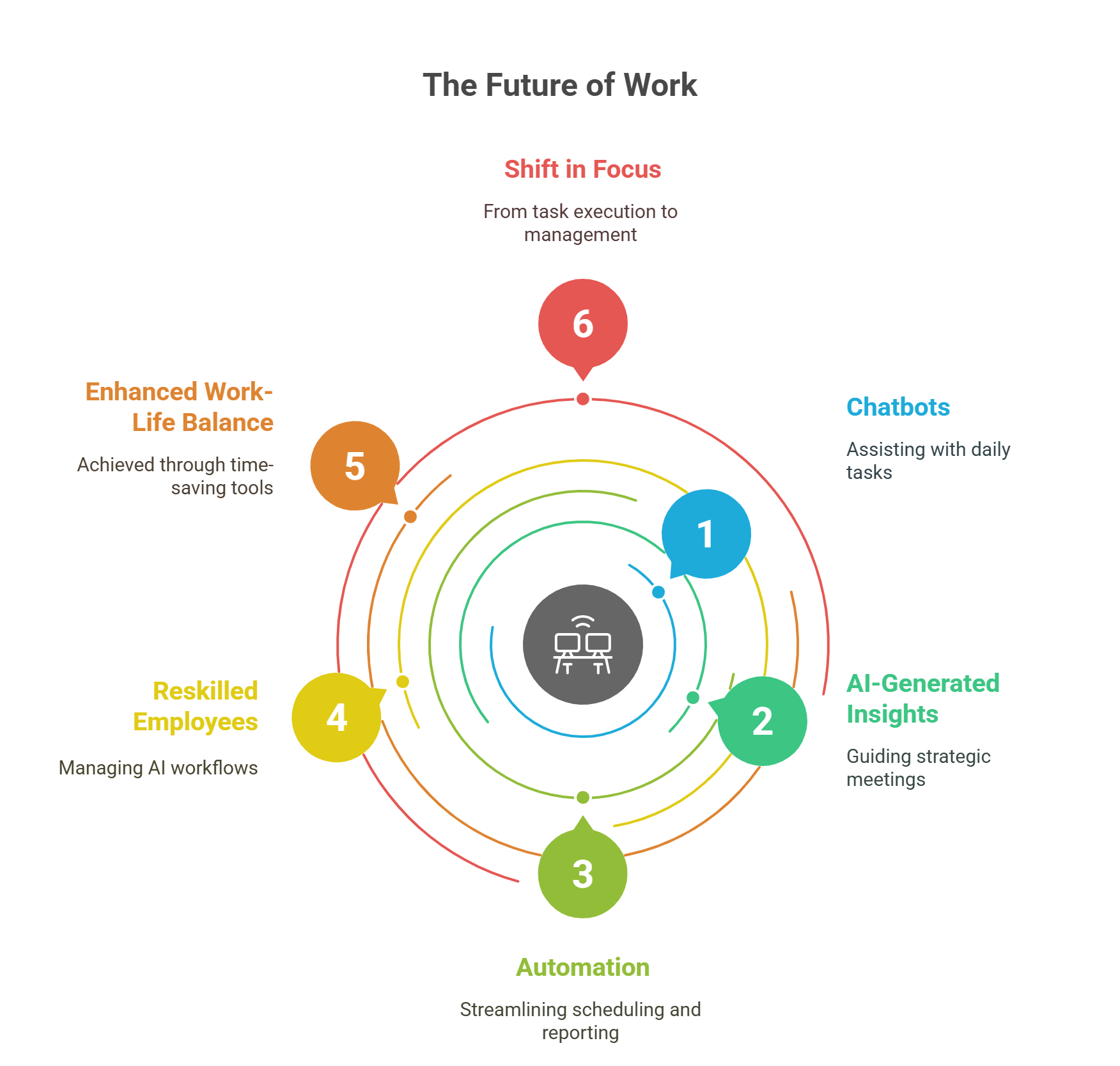
In 2025, offices are no longer defined by cubicles and paper trails. Instead, they are digitally intelligent ecosystems where humans and AI work side-by-side, connected by cloud infrastructure, real-time dashboards, and automation layers.
Characteristics of the AI-powered workplace:
- Chatbots assisting with daily tasks
- AI-generated insights guiding strategic meetings
- Automated scheduling, data syncing, and reporting
- Reskilled employees managing AI workflows
- Enhanced work-life balance through time-saving tools
The focus shifts from “doing” work to managing and optimizing it. Humans evolve from task executors to decision-makers, facilitators, and designers of AI-enhanced systems.
8. Preparing for an AI-Integrated Career

To remain relevant and competitive, today’s professionals must adapt to AI integration rather than fear it.
What you can do:
- Learn how to work with AI tools. Platforms like Zapier, ChatGPT, Jasper, Power Automate, and Notion AI are valuable for everyday work.
- Upskill in soft areas. Emotional intelligence, communication, and leadership become more important as routine tasks are automated.
- Focus on creative thinking. Innovators will always have a place, regardless of tech advancement.
- Pursue continuous education. Courses in business automation, ethical AI use, and digital transformation help professionals stay ahead.
The future belongs to those who collaborate with machines, not compete with them.

9. Where Do We Go From Here?

The comparison between AI tools and human workers is not about one replacing the other. It’s about creating a future where humans and machines thrive together, each amplifying the strengths of the other.
As we move forward in 2025 and beyond:
- Businesses must design systems where AI enhances, not overshadows human potential.
- Professionals must commit to lifelong learning and adaptability.
- Society must ensure ethical AI deployment and equitable workforce evolution.
The coexistence of humans and AI is not only possible—it’s already happening. And when done right, it leads to more humane, efficient, and intelligent workplaces for everyone.

FAQs – Your Questions Answered

1. Will AI replace human workers completely in the future?
No. While AI may automate repetitive tasks, it lacks the emotional intelligence, creativity, and ethical reasoning that only humans possess.
2. What are the best roles for humans in an AI-powered workplace?
Creative, strategic, and interpersonal roles—like leadership, counseling, storytelling, and innovation—remain in high demand.
3. How can workers prepare for a future with AI?
By learning to use AI tools, focusing on human-centric skills, and pursuing reskilling in areas like automation and data fluency.
4. What does “Human-in-the-Loop AI” mean?
It refers to AI systems that involve humans in the decision-making process, ensuring oversight, ethics, and contextual accuracy.
5. Are AI tools expensive for small businesses?
Not necessarily. Many AI tools are now affordable and scalable, with freemium or pay-as-you-grow models suitable for startups and small teams.
Future-Proof Your Career with Automation

Are you ready to thrive in the AI-powered future of work?
Join our Business Process with Automation course designed for professionals, entrepreneurs, and students eager to gain future-ready skills.
What You'll Learn:
- Master AI tools like Zapier, Make, ChatGPT, and Power Automate
- Automate real-world workflows in sales, HR, and operations
- Create optimized human-AI collaboration models
- Earn a certification to boost your career or business
- Access lifetime learning content and expert mentorship
Written By
Critical Legal Writer Intern at BISJHINTUS, English Honours (Gold Medalist) / LL.B.

Designed By
UI/UX Designer at BISJHINTUS

Share this post:
Leave a comment
Your email address will not be published. Required fields are marked *
Write a Review
Related Posts
How to automate your business in 2025? Discover top tools, strategies, and tips to streamline your o...
Discover 9 powerful reasons to learn business automation in 2025. Upskill, save time, boost efficien...
