


5 Essential Tools for Modern Educators to Thrive in 2025
Discover the top 5 essential tools every modern educator must use in 2025 to stay relevant, effective, and innovative. A must-read for teachers, trainers, and educational leaders.

Table of Content
-
Changing Landscape of Education in 2025
-
Tool 1: Learning Management Systems (LMS)
-
Tool 2: AI-Powered Assessment & Feedback Tools
-
Tool 3: Interactive Content Creation Platforms
-
Tool 4: Virtual Collaboration & Communication Tools
-
Tool 5: Professional Development Platforms
-
The Evolving Role of the Educator
-
Call to Action: Join the Course on 21st Century Education
-
Frequently Asked Questions (FAQs)

Changing Landscape of Education in 2025
The field of education has undergone a massive transformation in the past decade, and 2025 stands as a benchmark year in the evolution of how knowledge is delivered, consumed, and retained. Gone are the days when traditional chalk-and-talk methods dominated classrooms. Today, the emphasis is on personalization, technology integration, inclusivity, and global connectivity.
Modern educators are no longer just transmitters of knowledge; they are facilitators, mentors, and designers of learning experiences. Technology plays a central role in this shift. Whether it’s hybrid learning, gamification, or adaptive assessment, educators need a toolkit that is as advanced and dynamic as the world their learners inhabit.
This article breaks down the five most essential tools that every forward-thinking educator must adopt in 2025. These tools are more than just software or platforms—they’re bridges to more impactful, engaging, and relevant education.
Tool 1: Learning Management Systems (LMS)
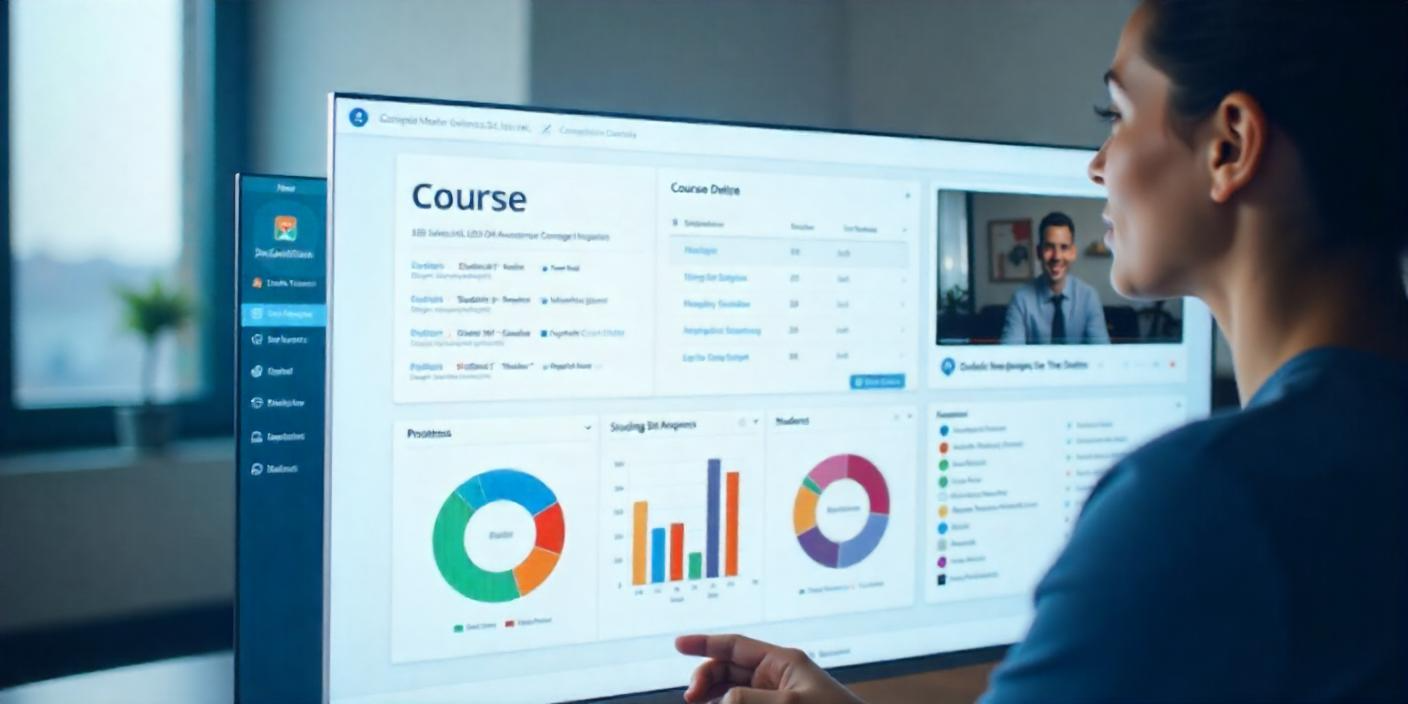
One of the foundational elements of modern education in 2025 is a robust Learning Management System (LMS). Whether you're teaching in a school, university, corporate setting, or as an independent instructor, LMS platforms act as the central nervous system of any learning environment.
Why LMS is Essential in 2025:
- Centralized Learning Hub: LMS platforms consolidate course materials, assessments, multimedia, student progress tracking, and communication tools in one place.
- Asynchronous and Synchronous Support: Whether it's live classes or self-paced modules, LMS supports both.
- Personalization Capabilities: Advanced LMSs now use AI to adapt content based on learner progress and engagement.
- Analytics for Educators: Instructors can access detailed insights on student performance, drop-off points, and content effectiveness.
- Accessibility Features: From multilingual content support to screen reader compatibility, LMSs ensure inclusivity.
Popular LMS Tools in 2025:
LMS Platform | Key Features | Best For |
Canvas | User-friendly, integrated media tools | Higher Ed, Online Courses |
Google Classroom | Easy collaboration, integrated with Google tools | K-12, General |
Moodle | Open-source, highly customizable | Universities, Institutions |
TalentLMS | Mobile-first design, gamification | Corporate Training |
But using an LMS effectively isn’t just about uploading materials. It’s about designing learning experiences that are interactive, measurable, and outcome-focused.
Educators who maximize LMS potential also provide timely feedback, create micro-learning modules, and structure learning paths that build from basic to advanced levels.
Tool 2: AI-Powered Assessment & Feedback Tools

Assessment is no longer a one-size-fits-all final exam. In 2025, it’s a continuous, personalized, and adaptive process—driven by artificial intelligence.
How AI Is Revolutionizing Feedback and Evaluation:
- Real-Time Feedback: Tools provide instant corrections and suggestions for improvement—especially useful for written assignments and quizzes.
- Adaptive Assessment: Based on a learner’s response, the difficulty level of the next question adjusts, maintaining an optimal challenge.
- Bias Reduction: AI helps reduce human grading bias and ensures fairness in evaluations.
- Performance Prediction: Teachers receive alerts on students at risk of underperforming, allowing for timely interventions.
Popular AI Tools for Assessment in 2025:
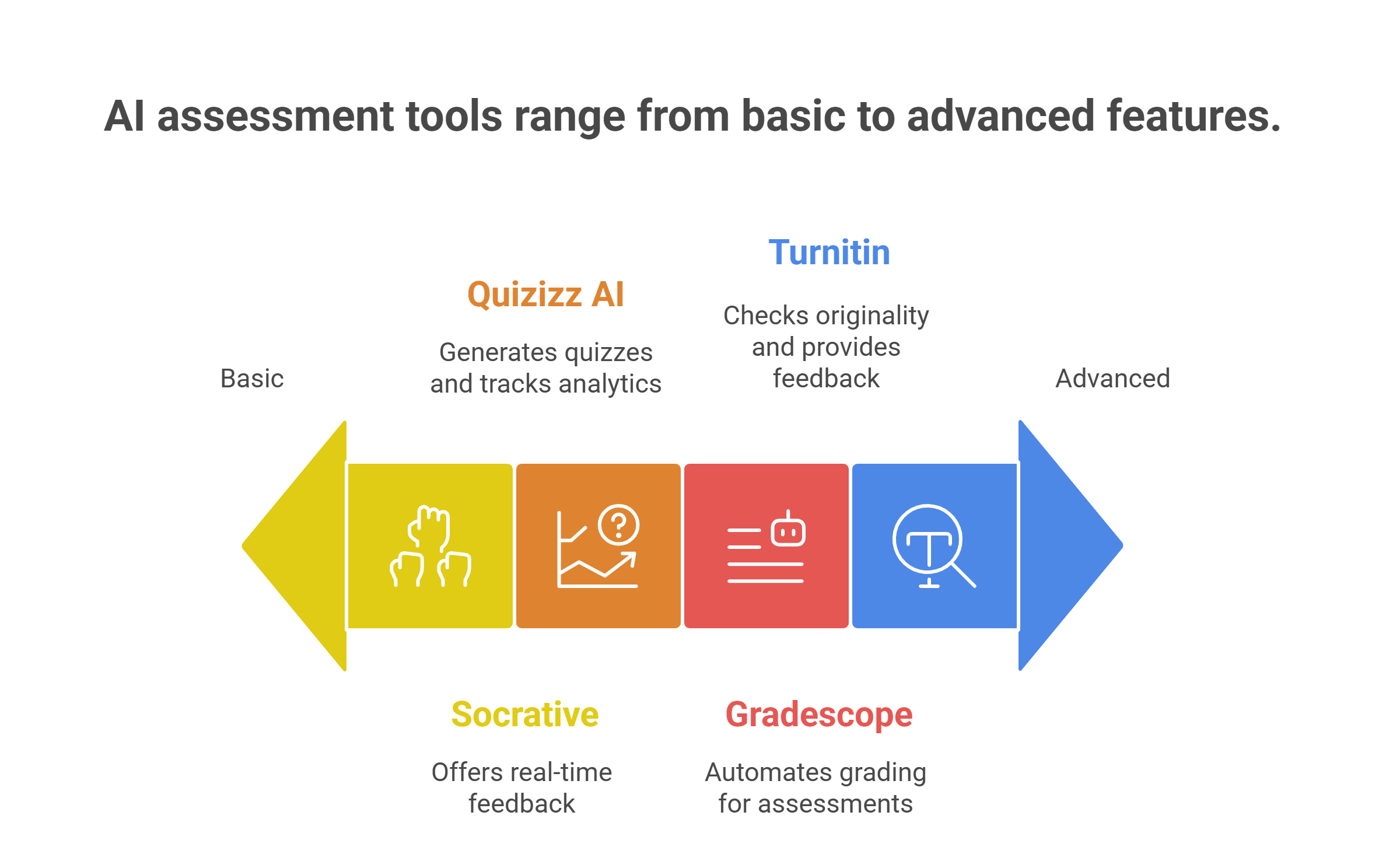
- Gradescope – Automates grading for handwritten or digital assessments.
- Quizizz AI – Generates quizzes based on content and tracks learning analytics.
- Socrative – Offers real-time feedback and formative assessment features.
- Turnitin Feedback Studio – Checks originality, grammar, and provides contextual feedback.
While AI tools are powerful, they work best when complemented by human oversight. A modern educator must still guide the emotional and ethical dimensions of learning—a task no machine can replicate fully.
Tool 3: Interactive Content Creation Platforms

Today’s learners crave more than static slides and PDF handouts. In 2025, educators are becoming content creators, designing lessons that are immersive, interactive, and media-rich.
The Role of Interactive Content in Modern Learning:
- Engagement Boost: Interactive videos, simulations, and gamified content capture attention more effectively.
- Multi-Modal Learning: Platforms allow for text, audio, video, and animation—all in one module.
- Self-Paced Exploration: Learners can interact with content in ways that suit their pace and preference.
- Knowledge Retention: Studies show that interactive learning improves long-term retention significantly.
Top Content Creation Tools in 2025:
Tool | Function | Ideal For |
Genially | Infographics, interactive presentations | Visual learners |
H5P | Quizzes, drag-and-drop activities | LMS integration |
Edpuzzle | Video-based questions and feedback | Flipped classrooms |
Canva for Education | Visual content, worksheets | Class projects, marketing |
Instead of passively consuming knowledge, learners now become participants. Educators must adopt a designer’s mindset—thinking not just of what to teach, but how to make it unforgettable.
Tool 4: Virtual Collaboration & Communication Tools

In the digital-first world of 2025, learning is no longer confined to classrooms or even physical borders. Virtual collaboration is essential—whether it’s student-to-student, teacher-to-parent, or teacher-to-student.
The Need for Seamless Communication in Education:
- Global Classrooms: Remote learning and international collaboration projects are common.
- Real-Time Interaction: From group work to Q&A sessions, tools must support fluid and spontaneous interaction.
- Hybrid Class Support: Whether in-person or remote, all students should have equal access to participation.
- Feedback Loops: Communication tools help educators stay in constant touch with learners’ needs and challenges.
Key Platforms in 2025:
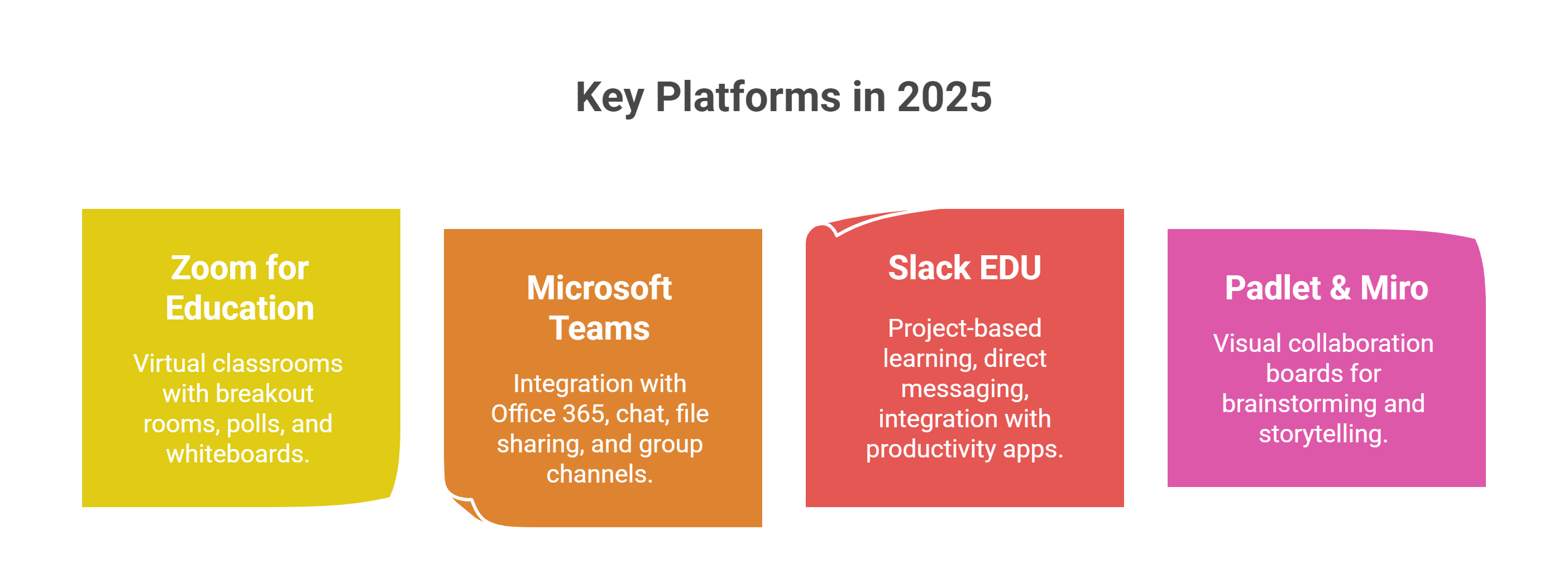
- Zoom for Education – Virtual classrooms with breakout rooms, polls, and whiteboards.
- Microsoft Teams – Integration with Office 365, chat, file sharing, and group channels.
- Slack EDU – Project-based learning, direct messaging, integration with productivity apps.
- Padlet & Miro – Visual collaboration boards for brainstorming and storytelling.
The modern educator is also a community builder. They create safe, inclusive, and productive digital spaces that support learning beyond content delivery.
Tool 5: Professional Development Platforms

Being a 21st-century educator means being a lifelong learner. In 2025, the best teachers are those who continuously upgrade their knowledge, tools, and teaching philosophy.
Why Continuous Professional Development (CPD) Matters:
- Stay Relevant: Pedagogical trends, tech tools, and learner expectations evolve rapidly.
- Networking: Platforms allow educators to connect, share best practices, and build global learning communities.
- Self-Paced Learning: Teachers can learn anytime, anywhere—just like their students.
- Certification & Recognition: Many platforms offer badges, micro-credentials, and certificates that carry real value.
Notable CPD Platforms in 2025:
Platform | Focus Area | Suitable For |
Coursera for Educators | Curriculum design, assessment, tech | All educators |
LinkedIn Learning | Soft skills, leadership, tech tools | Higher Ed, Trainers |
EdWeb | Webinars, educator networks | K-12 |
Teach2030 | Affordable training for developing regions | Global outreach |
Educators who invest in their growth not only improve their own skill set but also serve as role models for their students, embodying the essence of lifelong learning.
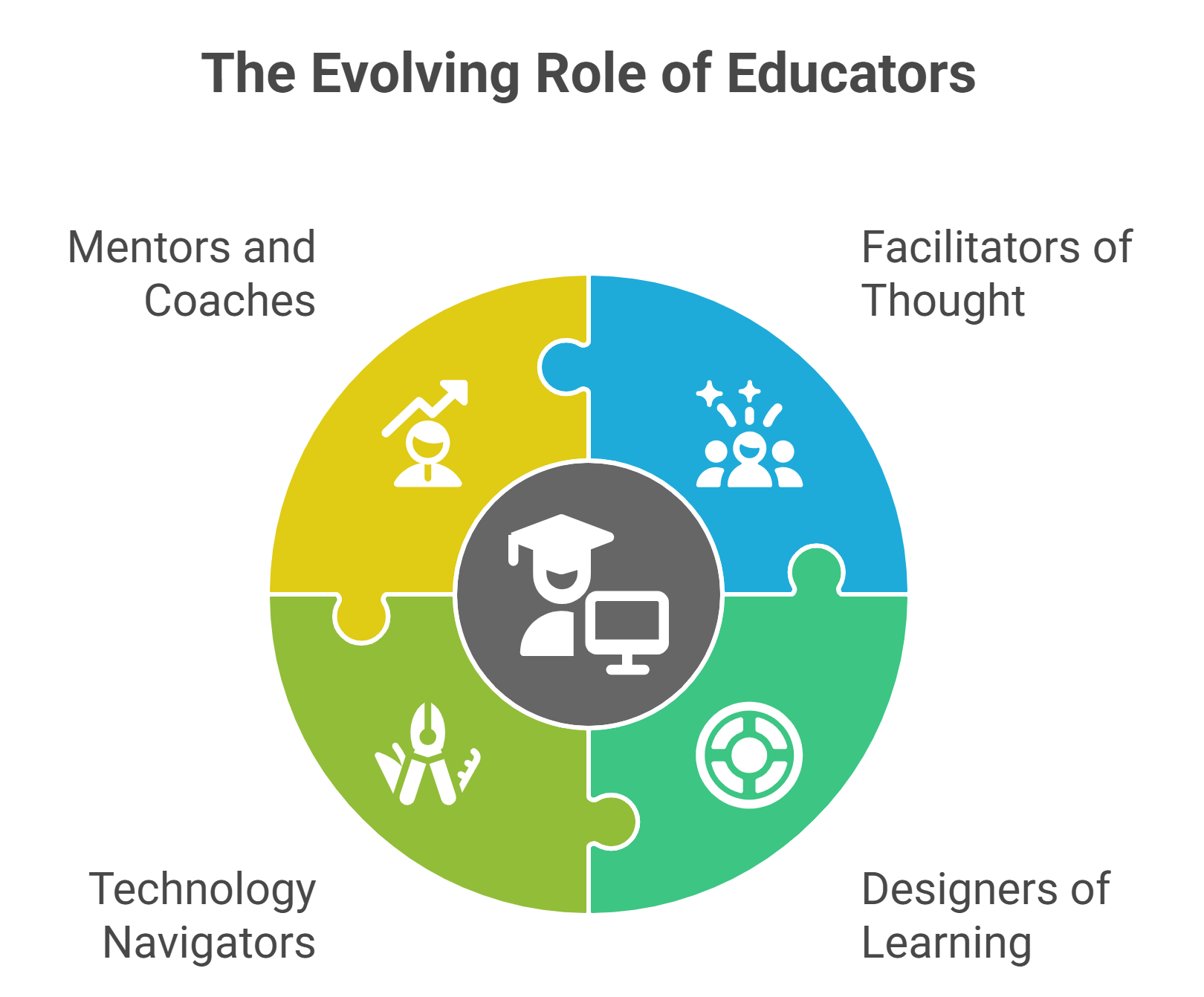
The Evolving Role of the Educator

In 2025, an educator is no longer a gatekeeper of information. They are:
- Facilitators of Thought: Encouraging inquiry, problem-solving, and critical thinking.
- Designers of Learning: Curating meaningful learning experiences rather than delivering lectures.
- Technology Navigators: Choosing and blending the right tools—not just using them.
- Mentors and Coaches: Supporting learners’ emotional, social, and ethical development.
Understanding and mastering these roles require both mindset and toolset. The future of education isn’t just digital—it’s deeply human, powered by purpose and empowered by technology.
Ready to Thrive? Join the Course on 21st Century Education

If you’re inspired to level up your teaching game, then our “21st Century Educator: Methods, Tools & Mindset – 2025 Edition” course is your next step.
Why Join This Course?
- Learn how to use every tool mentioned in this article, hands-on.
- Upgrade your mindset and teaching philosophy to fit today’s learner.
- Gain access to curated resources, expert sessions, and peer collaboration.
- Walk away with certification, skill mastery, and real-world application strategies.
Whether you're a school teacher, trainer, coach, or aspiring educator, this course is designed to help you thrive in the modern classroom—digital, hybrid, or physical.
Enroll today and redefine what it means to be an educator in the 21st century.
Frequently Asked Questions (FAQs)
- What is the most important tool for educators in 2025?
All five tools serve different purposes. However, an LMS acts as the foundation for organizing, delivering, and tracking learning outcomes.
- Are these tools suitable for school-level educators too?
Absolutely. Most tools like Google Classroom, Edpuzzle, and Canva for Education are ideal for K-12 settings.
- Do I need technical knowledge to use these tools?
No. Most platforms are designed to be user-friendly, with tutorials, templates, and support communities.
- How do I choose the right tools for my context?
Start by assessing your teaching style, student needs, and learning goals. The course also helps with tool selection strategies.
Can I access these tools for free?
Many tools offer free versions or educational discounts. The course will guide you on how to get started with minimal cost.
Written By
Critical Legal Writer Intern at BISJHINTUS, English Honours (Gold Medalist) / LL.B.

Designed By
UI/UX Designer at BISJHINTUS

Share this post:
Leave a comment
Your email address will not be published. Required fields are marked *
Write a Review
Related Posts
Explore the key differences between traditional and modern teaching methods in 2025. Learn what work...

Learn how to use cutting-edge technology to revolutionize your teaching methods in 2025. Discover pr...
